
Overcoming Oxidation and Evacuation Waste in Skincare Packaging
Cosmetic formulators and contract fillers continually encounter two distinct challenges when utilizing standard dip-tube containers: ingredient degradation from ambient air exposure and excessive product residue left behind in the bottom of the container. Sensitive active compounds such as retinoids, vitamin C, peptides, and botanical oils lose efficacy rapidly when exposed to oxygen every time a container is unsealed. Incorporating an airless pump bottle resolves both failure points by isolating the bulk formula within a non-vented chamber and utilizing a rising mechanical piston or vacuum differential to dispense high-viscosity emulsions with minimal product retention.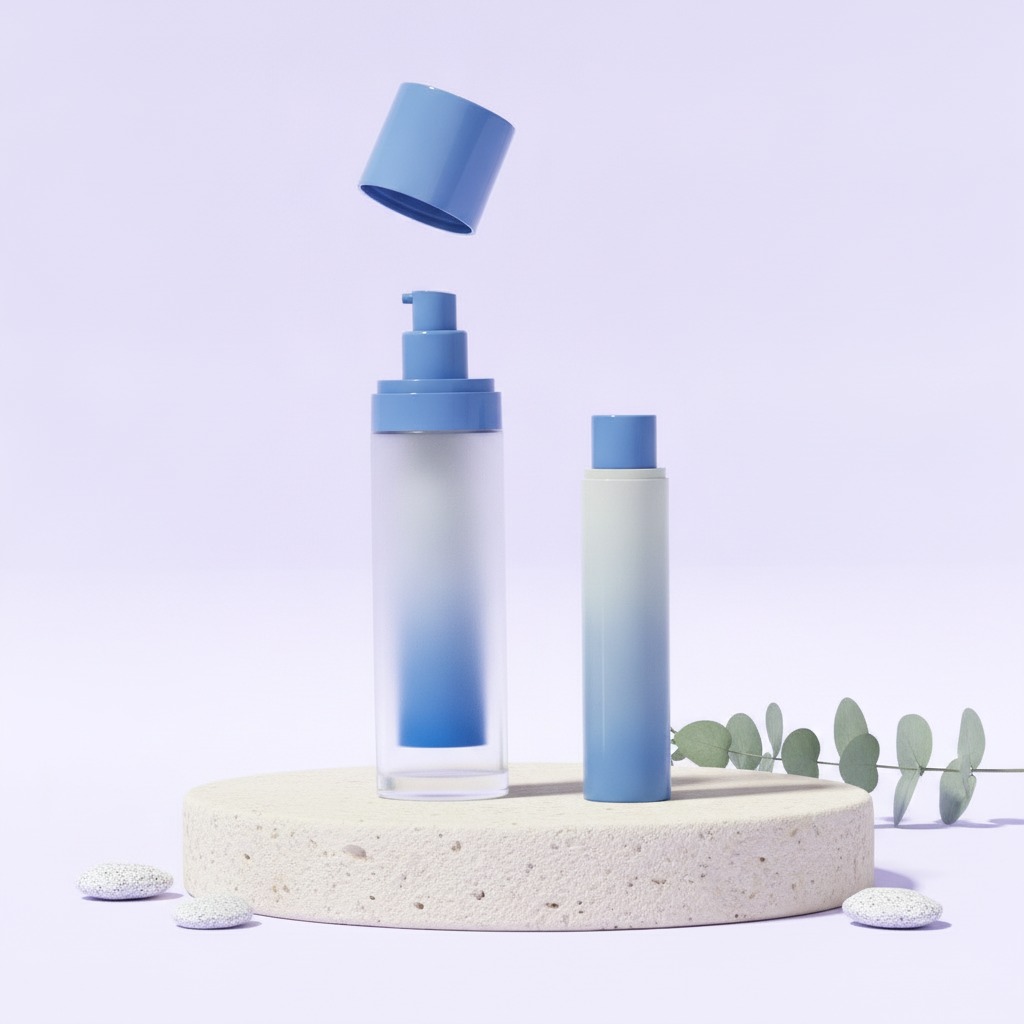
Product Overview: Cylindrical Multi-Piece Architecture
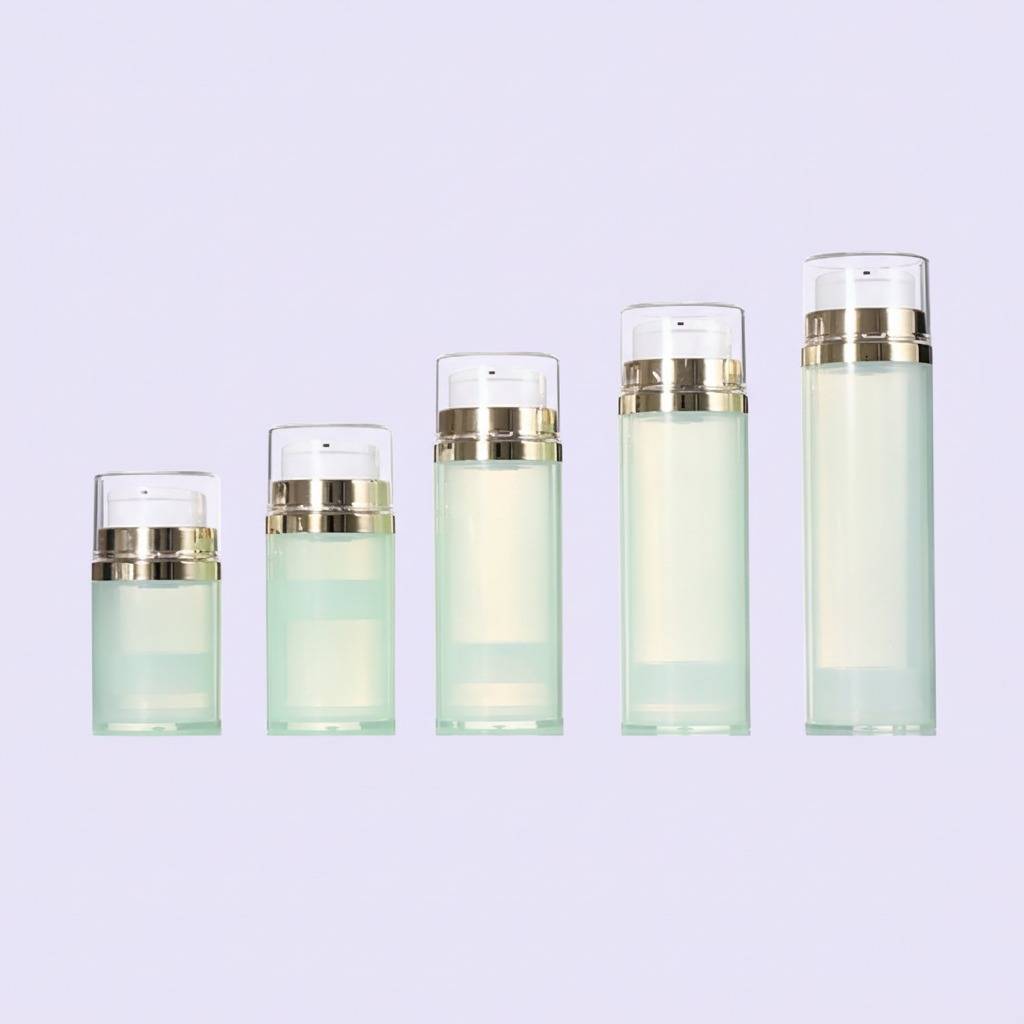
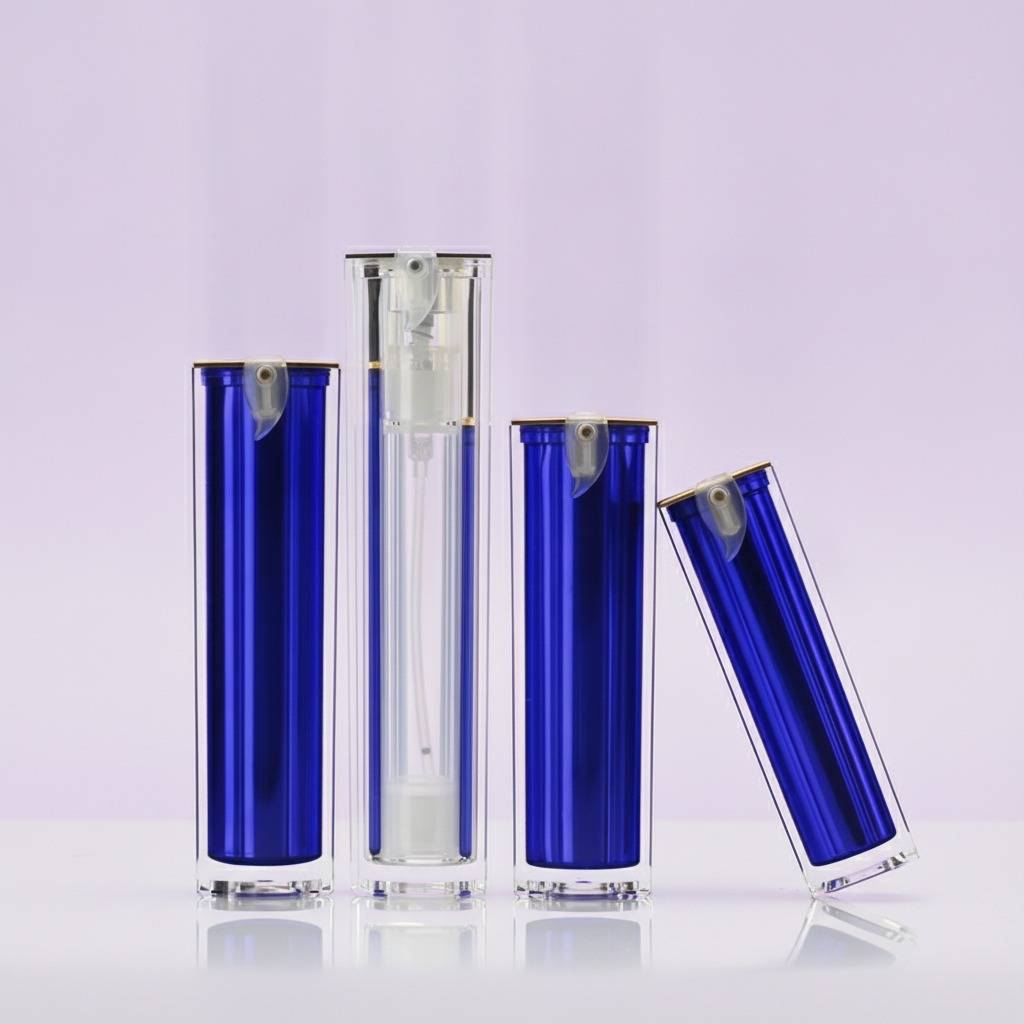
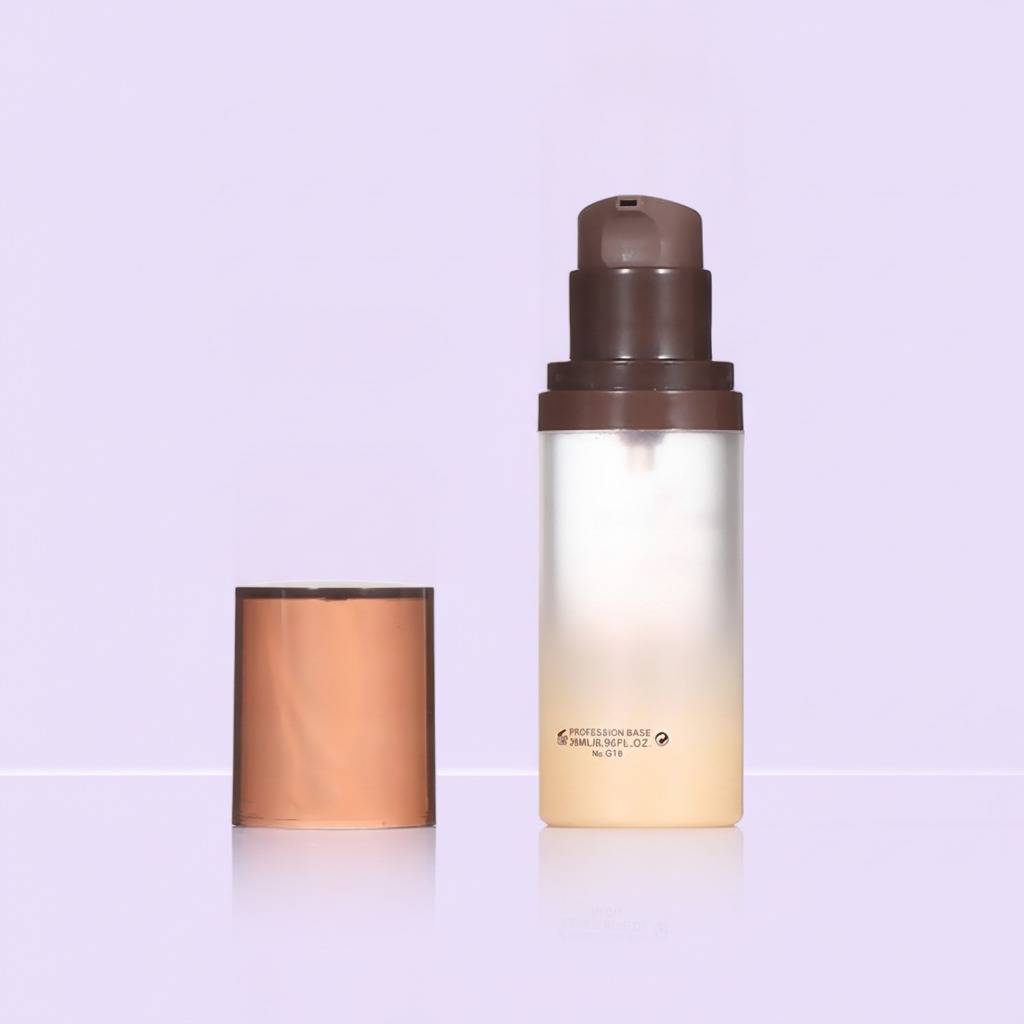
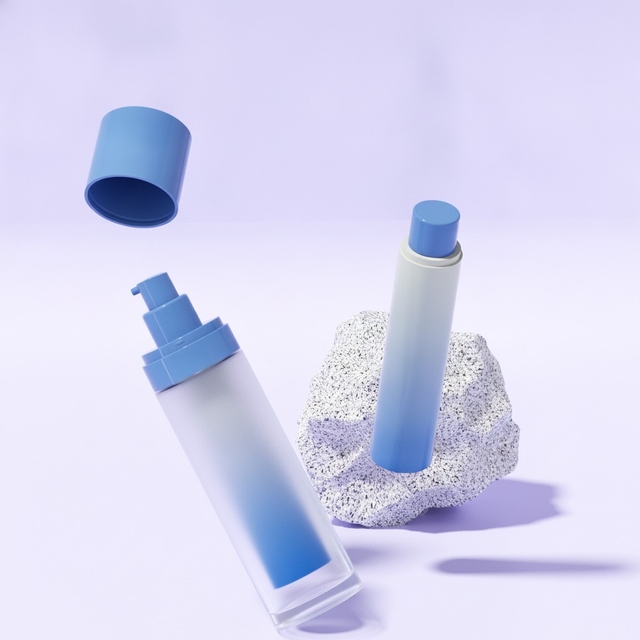
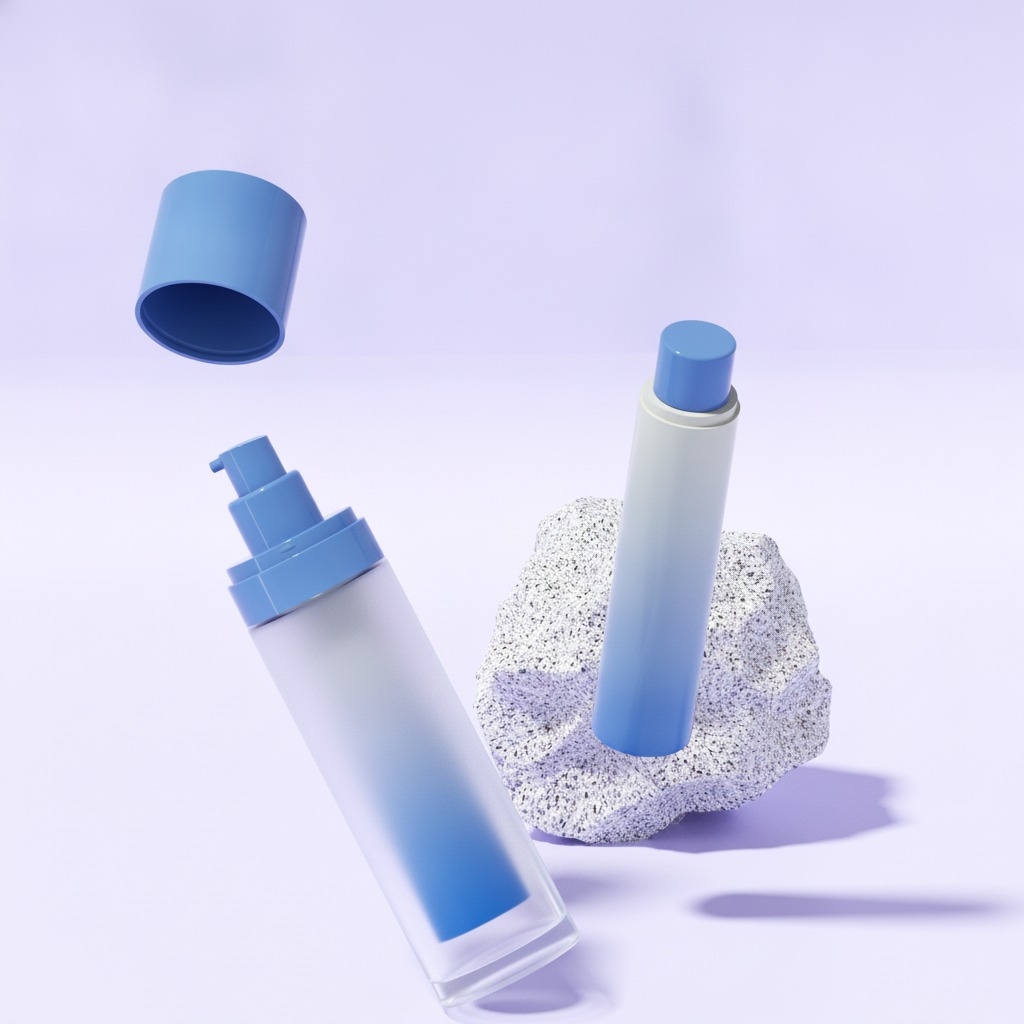
This packaging series features an elongated, cylindrical profile designed for stable filling line conveyance and ergonomic handheld consumer dispensing. The construction relies on a multi-component assembly, integrating a rigid cylindrical outer wall, a precision-fitted actuator, an internal valve assembly, and a protective snap-fit cap.
As observed on primary production assemblies, the platform utilizes molded polymer elements finished in combinations of solid opaque coloring and transparent viewports. The presence of clear lower or mid-body sections allows consumers to monitor remaining fill levels without exposing the bulk to light-induced breakdown where opaque shielding is required. While polymer resins such as PP, SAN, or PETG are typically utilized across the actuator, collar, and shell components, exact resin compatibility and structural barrier requirements depend on formula solvent profiles and filling parameters.
Technical Capabilities of Vacuum Dispensing Systems
Unlike conventional atmospheric pump mechanisms that introduce ambient air through an air vent to equalize internal pressure, a vacuum dispenser bottle operates strictly via negative displacement. Each stroke actuation opens an internal discharge valve, evacuating a predetermined dosage while drawing the bottom piston upward.
Key operational advantages include:
- 360-degree all-angle dispensing, permitting consistent discharge regardless of container orientation.
- Protection against microbial contamination and airborne drying, preserving preservative-light or clean-label formulations.
- Exceptional formula evacuation rates exceeding traditional dip-tube systems, reducing end-user product waste.
- Consistent stroke output across varying product rheologies, bridging light fluid liquids and dense emulsions.
Whether specified as an airless dispenser bottle for general personal care or an airless spray bottle configuration for ultra-fine atomization, mechanical chamber sizing must be matched to product viscosity to ensure rapid chamber replenishment and consistent dosage recovery.
Target Formulation Scenarios
Formulators select cosmetic airless packaging to stabilize active compounds across diverse skincare, dermocosmetic, and color cosmetic applications.
Target Product Categories
- Airless Serum Bottle Configurations: Tailored for high-potency, low-to-medium viscosity treatments containing active antioxidants vulnerable to atmospheric degradation.
- Airless Cream Bottle and Lotion Packaging: Suited for rich moisturizers, barrier creams, and night formulations where continuous air exposure would cause skinning or drying in the orifice.
- Airless Foundation Bottle Systems: Providing clean, drip-free distribution for liquid makeup, preventing pigment separation caused by repeated atmospheric contact.
- High-Performance Airless Skincare Bottle Applications: Ideal for dermatologist-backed product lines, post-procedure topicals, and sensitive-skin emulsions formulated with reduced preservative loads.
Materials, Tooling, and Finish Options
High-volume cosmetic production demands tight injection tooling to prevent piston friction or vacuum blow-by. A standard plastic airless bottle offers low tare weight, impact resistance, and straightforward integration with automated capping equipment. For prestige market segments evaluating structural weight and premium hand feel alongside plastic platforms, brands often contrast these polymers against a glass airless bottle alternative based on shelf positioning.
Tooling supports numerous aesthetic customization paths:
- Color Formulation: Custom masterbatch injection molding for the cap, pump collar, and bottle body, including dual-tone assemblies.
- Surface Finishing: Matte soft-touch spray coating, UV gloss lacquering, or electroplated metallic collars for actuator accents.
- Decoration & Labeling: Direct multi-pass silk-screen printing, hot-foil stamping on cylindrical faces, or precision shrink sleeving.
- Custom Configuration: Brands requiring bespoke internal volumes, distinct base profiles, or custom actuator ergonomics can partner with a specialized airless cosmetic packaging supplier to engineer custom tooling molds.
Quality Control Benchmarks and Compatibility Testing
Because mechanical airless systems depend on hermetic seals, rigorous incoming inspection and pre-filling validation are essential. Sourcing from a reliable airless bottle supplier involves validating key mechanical benchmarks:
- Vacuum Leak Testing: Placing filled containers under controlled negative-pressure chambers to verify seal integrity around the actuator collar and bottom seal.
- Priming Stroke Verification: Measuring the exact number of initial actuations required to draw formula and establish regular dispensing.
- Evacuation Rate Testing: Quantifying residual bulk product remaining in the chamber after complete stroke depletion.
- Pump Output Uniformity: Testing gravimetric output over repeated dispensing cycles using the specific target product bulk.
Because viscosity, surface tension, and volatile silicone content vary significantly between formulas, physical compatibility testing remains mandatory before full commercial filling.
B2B Sourcing: Evaluating an Airless Pump Bottles Manufacturer
Procurement teams, contract manufacturing organizations (CMOs), and beauty brand managers must weigh several operational variables when finalizing packaging orders:
- Neck Closure and Filling Method: Determine whether your contract filler utilizes top-fill or bottom-fill equipment, as piston insertion procedures vary across packaging configurations.
- Tooling Tolerances: Ensure the airless pump dispenser mechanism maintains consistent actuation force across seasonal temperature fluctuations.
- Scalability: Verify that your airless pump bottles manufacturer can scale from pilot sampling to mass-production multi-cavity injection runs without dimensional drift.
Request Specifications and Sample Components
Advance your next formulation project with tailored packaging built for active ingredient integrity. Contact our technical sales team to request functional evaluation samples, complete dimensional engineering schematics, and volume tooling quotes for your custom airless pump bottle requirements.