
Engineered Protection: Working with an Aluminum Airless Bottle Manufacturer
Sourcing primary packaging for sensitive skincare formulas requires balancing formula stability against retail visual impact. For cosmetic brands developing active serums, retinol treatments, and antioxidant emulsions, exposure to ambient air causes premature oxidation, discoloration, and ingredient degradation. Partnering with a dedicated aluminum airless bottle manufacturer resolves this vulnerability. By pairing an airtight piston or pouch mechanism with rigid metal and dual-wall enclosures, brands safeguard vulnerable active compounds from atmospheric contact while presenting a sleek, weighted container on retail shelves.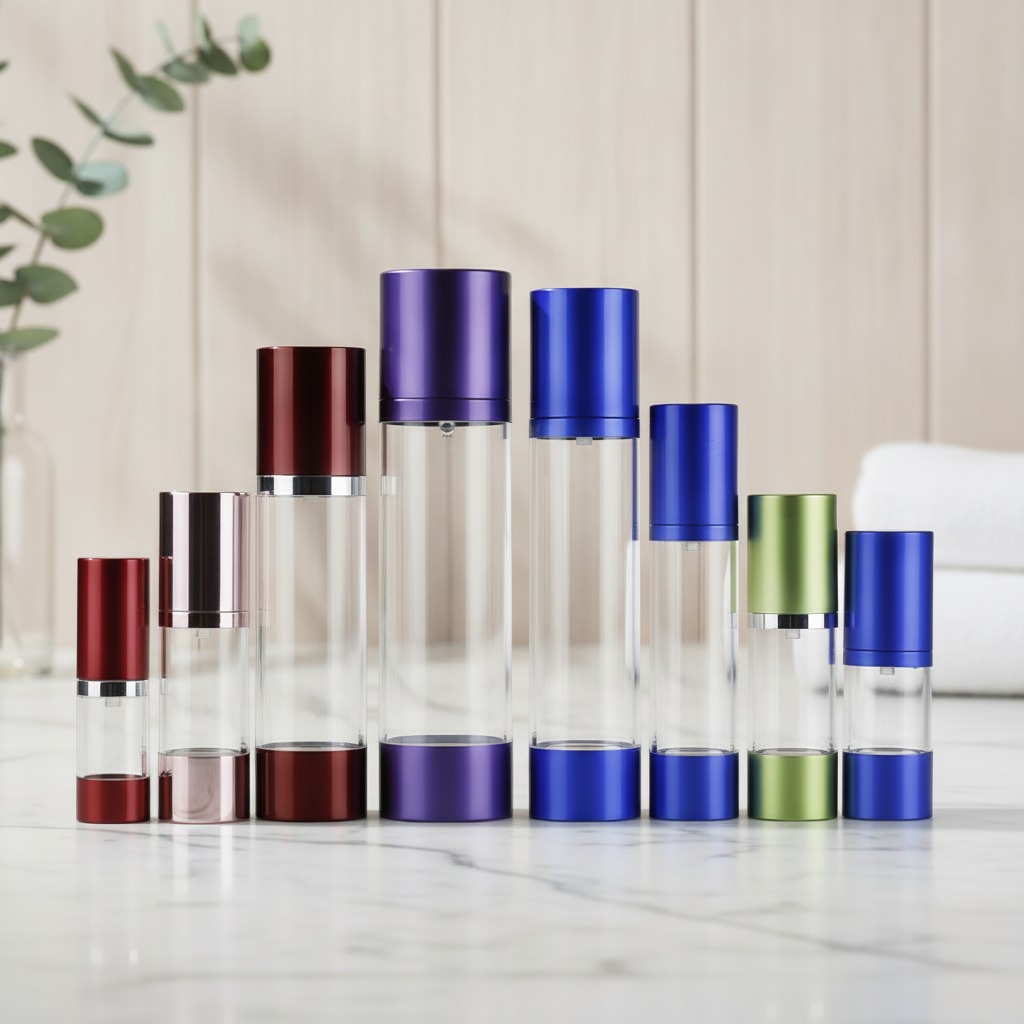
Product Overview and Visual Architecture
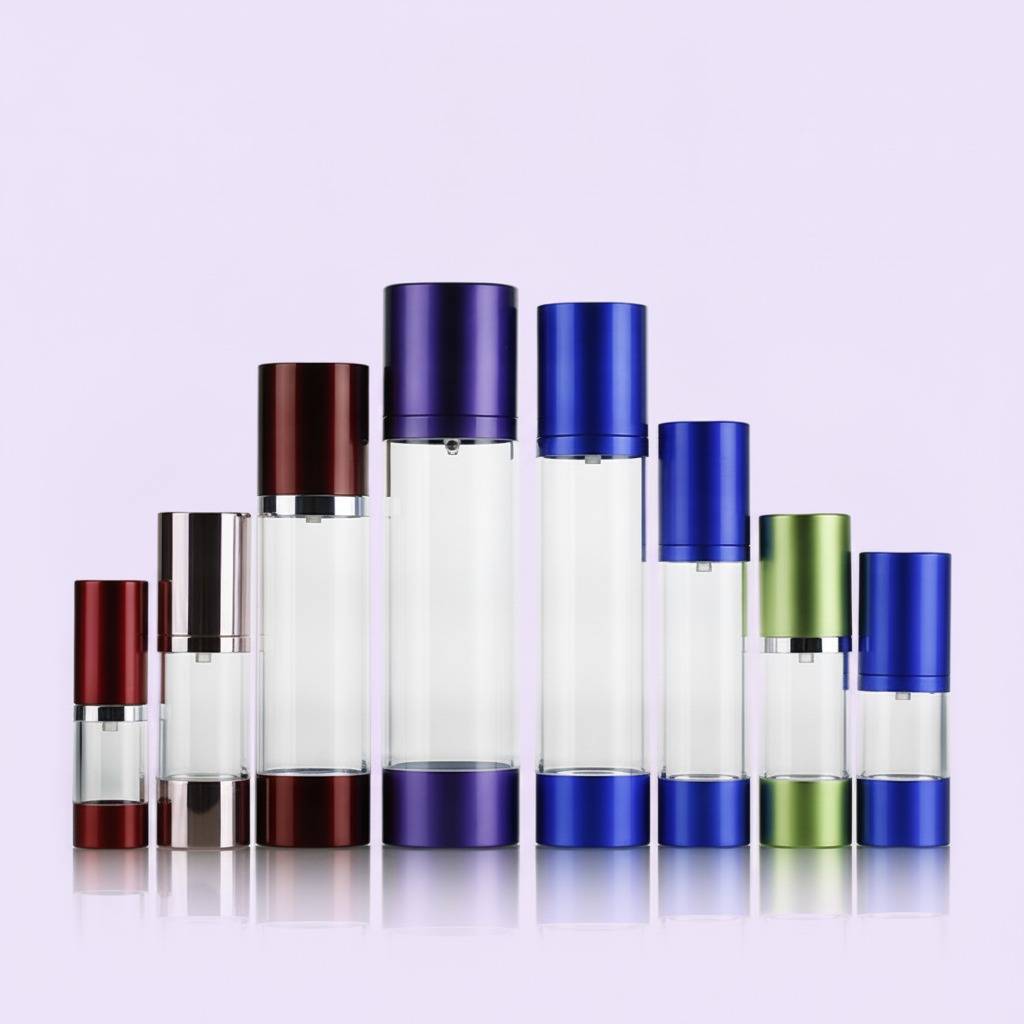
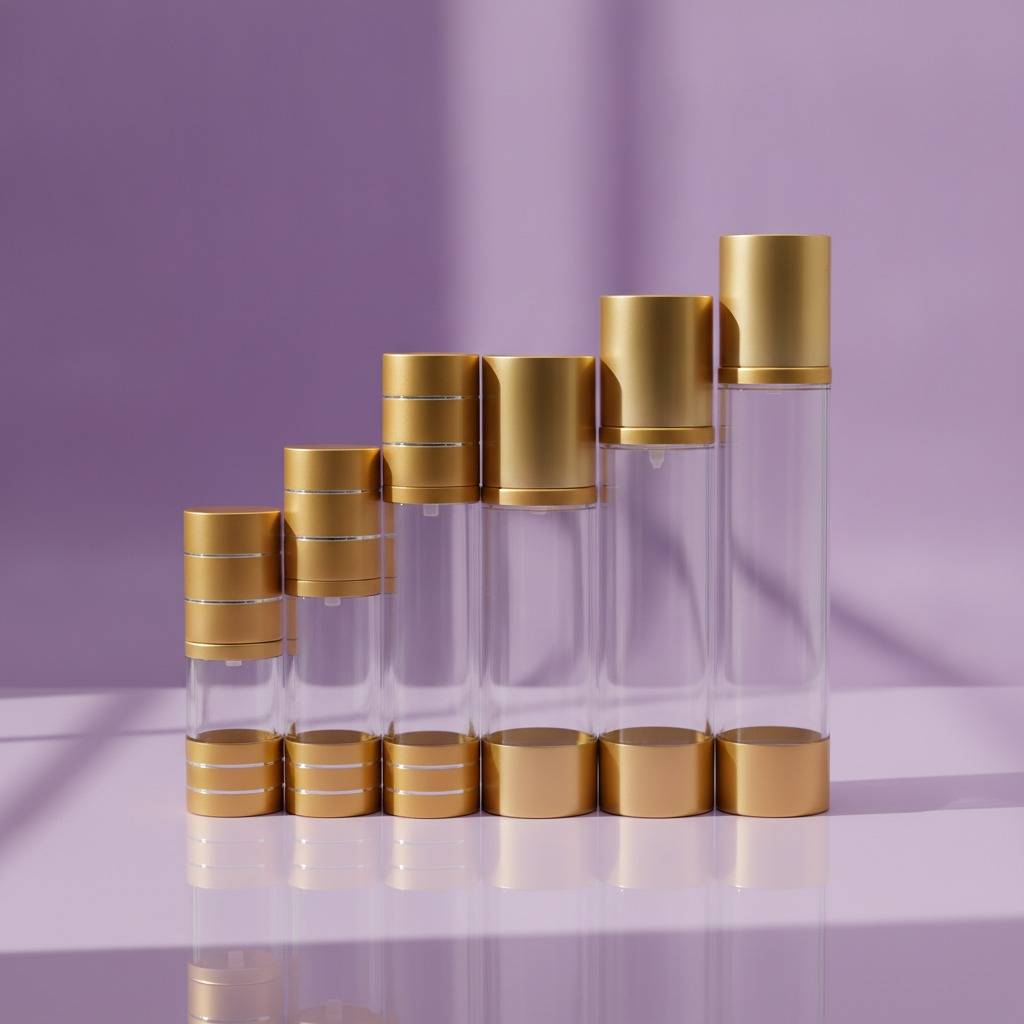
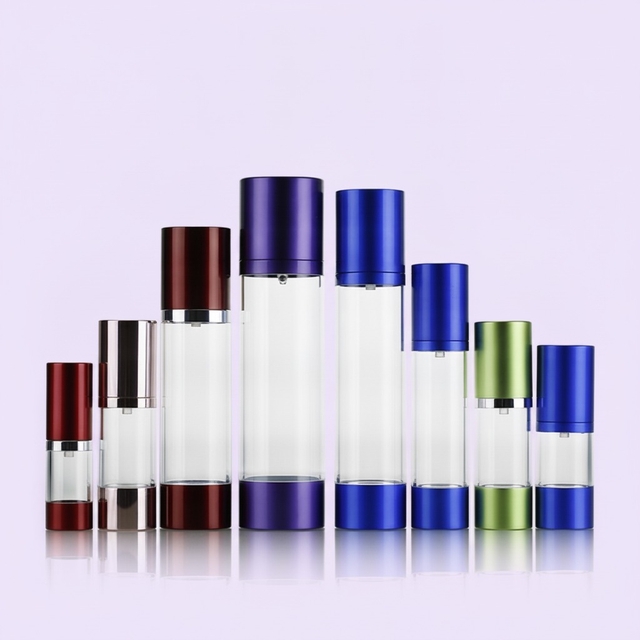
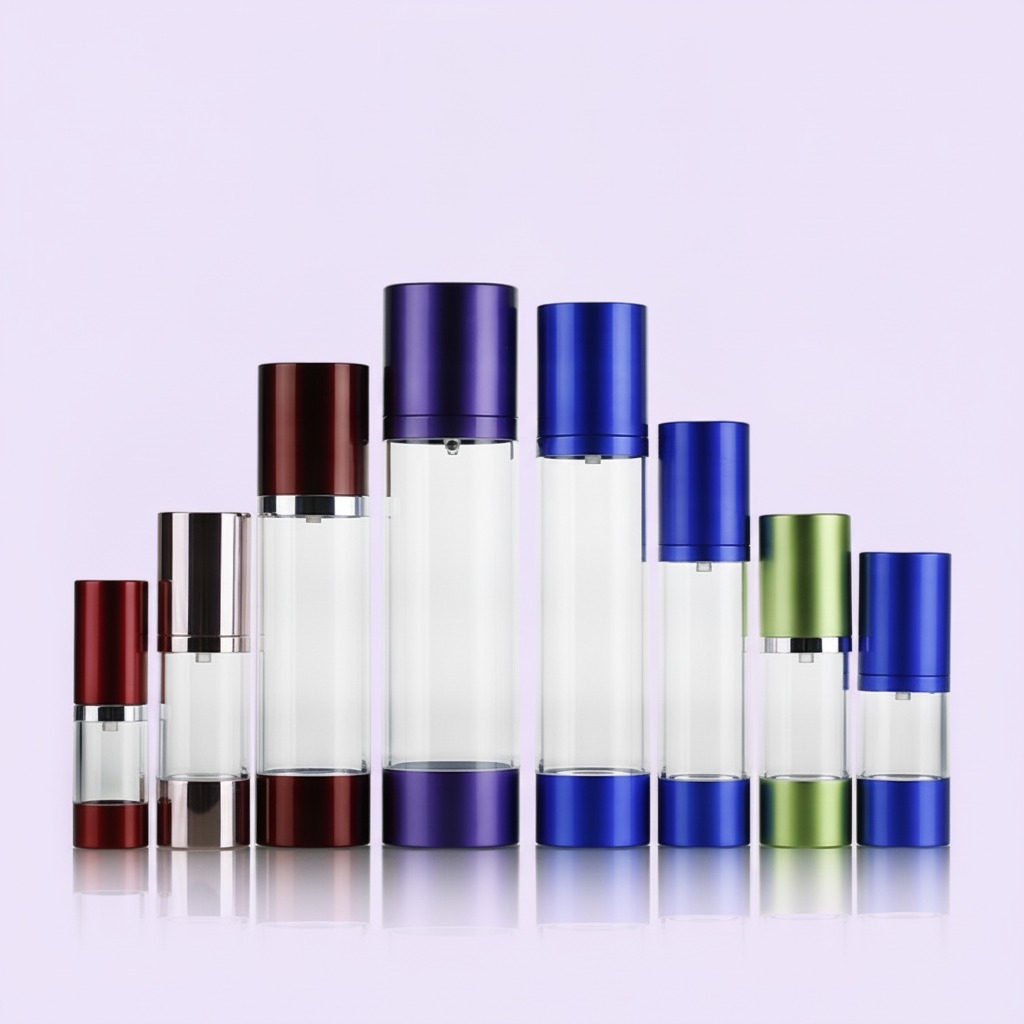
Our container portfolio features a cohesive size family of cylindrical dispensing vessels designed specifically for high-end skincare, treatment lotions, and corrective serums. Each unit utilizes a multi-layer visual structure:
- A transparent, rigid outer wall that reveals the inner chamber, displaying the formulation level clearly during consumer use.
- Precision color-matched caps and base enclosures featuring high-gloss, metallized finishes available in deep jewel tones, vibrant hues, and classic metallic sheens including silver, emerald green, royal blue, rich purple, crimson red, and dark bronze.
- A clean, flat-topped cylindrical profile that maintains consistent geometry across various heights and diameters, enabling streamlined brand cohesion across product lines ranging from travel sizes to full-size daily regimens.
- An inner reservoir and dispensing assembly anchored by an engineered collar ring along the neck seam, delivering clean strokes and measured dosing.
Structural Specifications and Packaging Capabilities
As an established airless packaging manufacturer, we engineer components to balance dimensional precision with ergonomic daily operation.
Dual-Wall Profile
The dual-layer design provides depth and optical clarity through the outer cylinder while insulating the primary inner product chamber. This architecture supports both integrated airless formats and potentially replaceable cartridge systems, giving formulators flexibility during product range development.
Graduated Dimensional Series
The size family features graduated heights and proportional diameter shifts. This tiered approach allows brands to maintain a uniform visual identity across eye creams, facial serums, brightening treatments, and barrier repair lotions without re-engineering secondary cartons or shelf displays from scratch.
Sealing and Actuation Alignment
The snap-fit or threaded upper collar holds the dispensing actuator flush against the bottle shoulder. Tight manufacturing tolerances minimize mechanical wobble during pump priming and routine actuation.
Materials, Resins, and Surface Treatments
Selecting an experienced airless cosmetic packaging manufacturer ensures access to versatile material pairings tailored to product viscosity and solvent compatibility.
Outer Cylinder Resins
The crystal-clear outer body is typically molded from rigid technical polymers such as AS (acrylonitrile styrene), PET, or polymethyl methacrylate (acrylic). These resins offer high optical clarity, scratch resistance, and impact strength for shelf durability.
Metallic Caps and Base Collars
The reflective top closures and lower mounting bases leverage anodized aluminum sheaths or metallized vacuum-coated plastics. This gives the tactile feel of cool metal with uniform color saturation that resists tarnishing from skin oils or product residue.
Product-Contact Inner Liners
Inner reservoirs and pump wetted parts are commonly molded from inert polyolefins like PP (polypropylene) or PE (polyethylene). These inner materials minimize chemical migration and leaching risks, preserving product purity from initial filling to end consumer evacuation.
Manufacturing Flow and OEM/ODM Integration
Operating as an aluminum airless bottle factory, production involves synchronized injection molding, surface metallization, clean-room assembly, and leak testing.
1. Precision Injection Molding: High-cavity tooling shapes the clear outer shells and internal chambers under controlled temperatures to eliminate flow lines, sink marks, or micro-bubbles.
2. Surface Metallization and Anodizing: Cap shells and base covers undergo vacuum metallization, spray lacquer coating, or aluminum stamping/anodizing to achieve uniform gloss and exact chromatic values.
3. Pump Sub-Assembly: Springs, elastomer valves, piston discs, and actuator heads are assembled on automated lines to verify uninhibited piston movement.
4. Automated Component Integration: Inner reservoirs, collars, and decorative exterior sleeves are press-fitted into cohesive finished units under clean assembly standards.
For brands seeking custom aluminum airless bottles or turn-key aluminum airless bottle OEM services, our engineering teams accommodate client-supplied technical drawings, custom tooling profiles, and matched Pantone coloration.
Application Scenarios Across Product Lines
Because air-exposure risks vary between cosmetic formulas, this packaging architecture serves diverse category requirements:
- Antioxidant and Vitamin C Serums: Prevents browning and loss of efficacy caused by recurrent air intake.
- Retinol and Peptide Emulsions: Minimizes light and atmospheric degradation throughout extended consumer use cycles.
- Eye Serums and Targeted Balms: Compact diameter configurations serve as targeted treatment applicators.
- Premium Skincare Collections: Complete visual consistency across a brand's cleansing, toning, and moisturizing lineup.
Quality Control and Verification Standards
Reliable airless lotion bottle manufacturer standards require strict testing protocols at every run:
- Dimensional Inspections: Caliper and optical verification of neck finishes, collar seams, and inner reservoir wall consistency.
- Vacuum Leak Testing: Submersion vacuum chamber testing of assembled, filled units to ensure seals withstand air pressure fluctuations during air freight and temperature cycling.
- Actuation Priming and Output Consistency: Verification that pumps prime within a specified stroke range and dispense a repeatable volume per stroke without sputtering.
- Coating Adhesion: Cross-hatch and rub testing on metallized caps and painted bases to verify that surface coatings will not peel, flake, or soften upon repeated contact with formula solvents.
Buyer Decision Factors for Packaging Selection
When choosing an airless bottle supplier China or an international wholesale aluminum airless bottles distributor, procurement teams should evaluate:
- Formula Compatibility: Conducting preliminary stability tests to verify the inner cylinder and pump gaskets do not swell, crack, or react with active ingredients or volatile carrier oils.
- Actuator Dosing Requirements: Matching target pump outputs (e.g., 0.15 ml vs. 0.25 ml per stroke) to your recommended consumer application protocol.
- Decoration Options: Confirming compatibility with secondary processes such as silk-screen printing, hot foil stamping, UV lacquering, or soft-touch coatings.
- Fill-Line Compatibility: Ensuring bottom-fill or top-fill geometry aligns with your contract filler’s existing puck systems and nozzle clearances.
Connect with Our Packaging Engineering Team
Whether you need private label airless bottles for an upcoming retail launch or wish to develop bespoke custom aluminum airless bottles for a luxury brand tier, our engineering team provides complete technical support. Contact our sales department today to request product samples, discuss color-matching capabilities, and evaluate sizing options tailored to your formulation requirements.