
Cosmetic Packaging Set Overview
A Cosmetic Packaging Set helps skincare and personal-care brands solve a practical launch problem: keeping bottles, jars, and closures visually consistent while giving each formula the right dispensing method. A coordinated set like this one brings pump bottles and cream jars together in one series, which simplifies product line planning, shelf presentation, and day-to-day use for customers who need both controlled dispensing and wide-mouth access for thicker products.
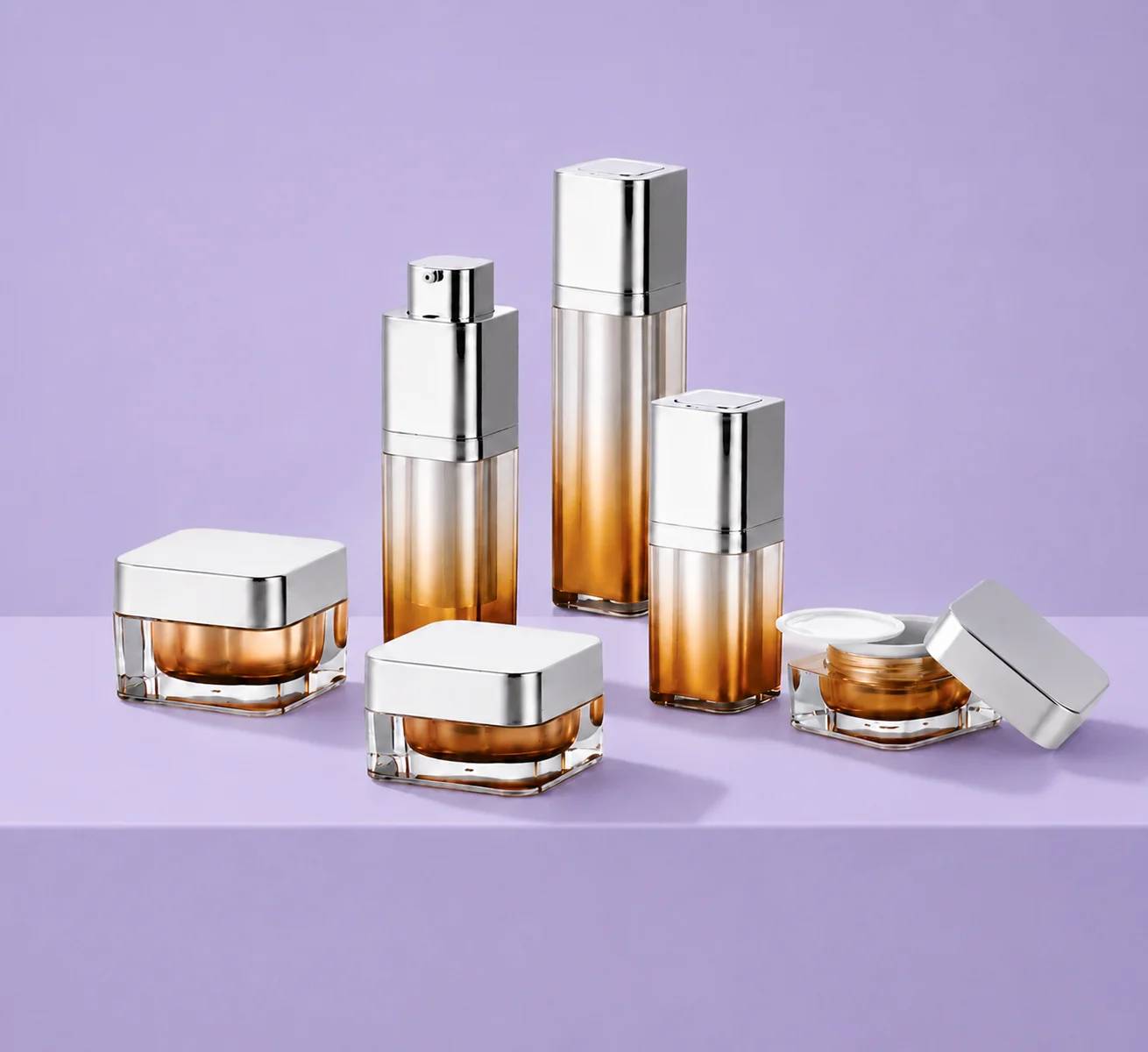
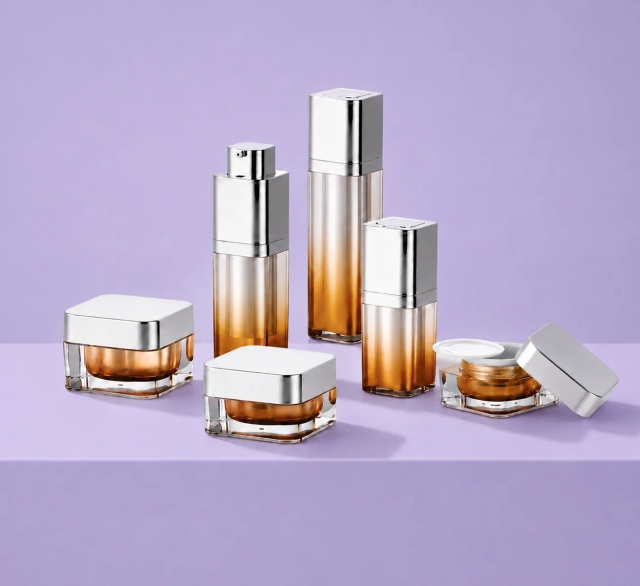
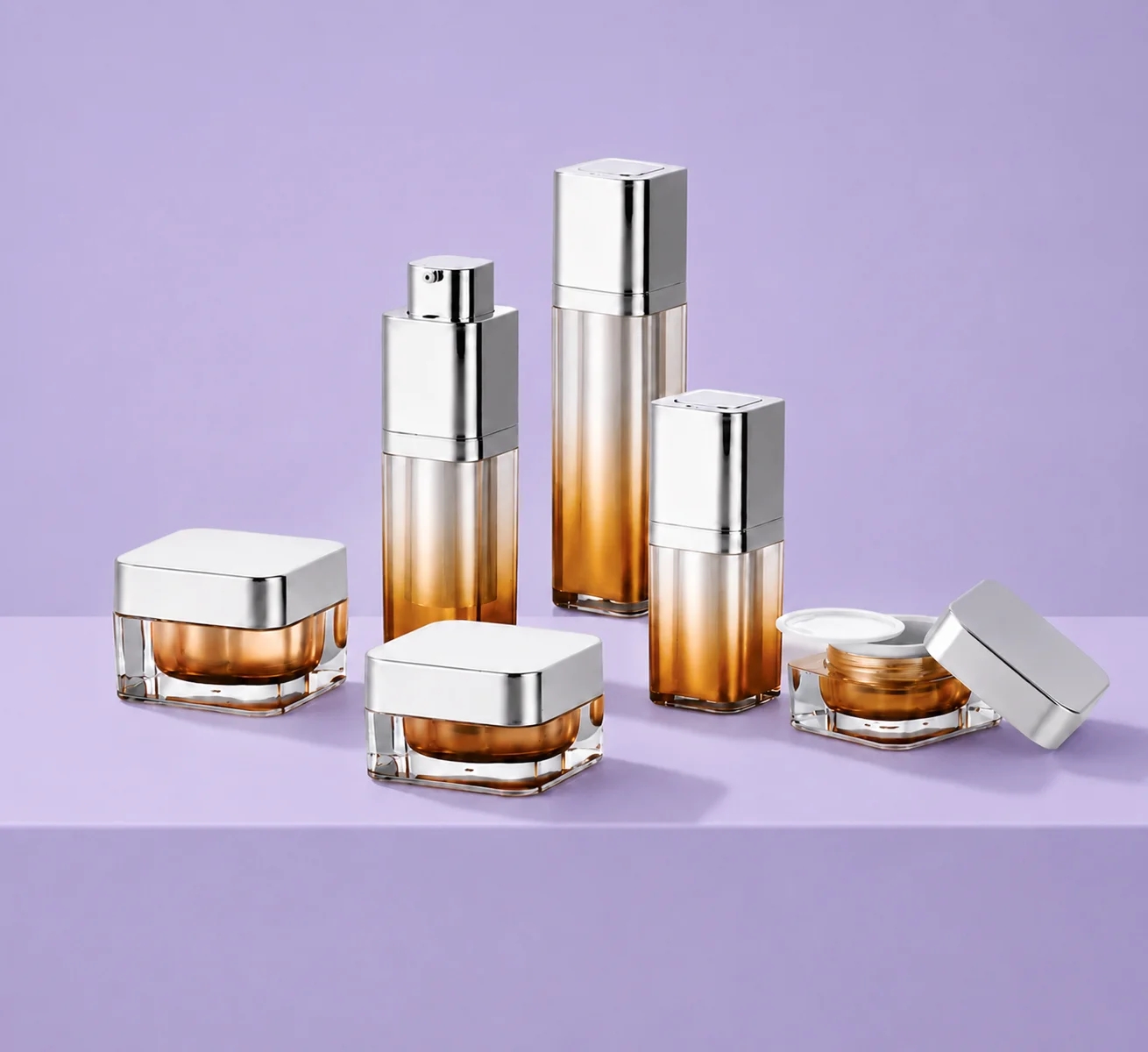
From the visible product structure, this set combines tall rectangular bottles with pump tops and low-profile square or rectangular jars with removable lids. The containers appear to share rounded edges, flat-sided geometry, and a stable footprint that supports neat retail display. The overall look is clean and modern, with clear bodies and reflective silver-tone caps that create a premium finish without relying on excessive decoration.
What the Set Includes
This packaging series appears to include two main container types: pump bottles and cream jars. The bottles are designed for liquids or semi-viscous products that benefit from a dispenser, while the jars are better suited to formulas that are scooped or applied by hand.
Pump Bottles
The taller containers feature pump-style tops and rectangular profiles. This format is commonly used for lotions, serums, essences, liquid cleansers, and similar skincare products. Pump packaging helps control dosage, reduces direct hand contact with the formula, and supports a cleaner user experience in routine skincare.
Cream Jars
The lower-profile containers have wide openings and removable lids, which make them suitable for creams, balms, masks, and gels. A jar format is useful when the product is thicker, when a brand wants easy access to the entire fill, or when the formula is intended for manual application.
Visible Design Characteristics
The product images show a coordinated set with a consistent design language. The containers use rounded corners and a faceted, flat-sided body shape. That geometry gives the series a stable appearance on shelves and a more refined feel than a basic round bottle.
The bodies appear transparent, with an amber or tinted lower section visible through the walls. Because the image does not confirm the exact material, this should be treated as a visual observation rather than a material claim. The clear appearance is still useful for buyers because it allows fill-level visibility and helps the formula become part of the package presentation.
The caps and lids are silver-chrome in appearance, smooth, and highly reflective. That finish may come from plated plastic, vacuum metallization, spray coating, or another surface treatment; the exact method is not confirmed. What is visible is a polished metallic effect that elevates the overall presentation of the set.
Key Specifications and Capabilities
Based on the image, the main capabilities of this cosmetic packaging set are straightforward and commercially useful:
- Coordinated bottle and jar formats for a unified product line
- Pump dispensing for controlled release of liquid or lotion-type formulas
- Wide-mouth jar access for creams and thicker personal-care products
- Transparent or translucent body styling for product visibility
- Compact square footprint for stable storage and display
- Reflective silver-tone closures for a premium visual effect
Some important details are not visible and should be confirmed before purchasing, including exact capacity, wall thickness, closure type, pump output, and material composition. The image suggests a retail-ready series, but it does not provide the technical data needed for specification approval.
Materials and Finish Options
The visible bodies appear to be either clear rigid plastic or glass. Both materials are widely used in cosmetic packaging, but the image alone does not confirm which one applies here. For brands, the material choice usually depends on product compatibility, budget, appearance, shipping requirements, and the desired consumer perception.
Clear packaging is often selected when a brand wants the product color to show through the container or when it wants customers to see the fill level. Amber or tinted tones are also common in skincare packaging because they can create a warmer visual identity and help differentiate variants within a line.
The silver-look closures are a strong design feature of the set. In cosmetic packaging, this kind of finish is often chosen to communicate cleanliness, luxury, or a clinical-modern look. The glossy reflective surface can work especially well for premium skincare, spa collections, and private-label ranges that need a more polished shelf presence.
Manufacturing and Assembly Considerations
Although the exact process is not confirmed, the container shapes suggest standard cosmetic packaging production methods such as injection molding for plastic parts or formed glass production for glass versions. The closure components may be assembled after surface finishing, especially if the silver effect is created through plating, metallization, or coated decoration.
For buyers, the important point is not only how the set looks, but also how the components work together. A pump bottle needs a closure that fits securely and dispenses reliably. A jar needs threads, lid alignment, and sealing behavior that support consistent closing and opening. When sourcing a coordinated set, brands should ask for complete assembly samples before committing to mass production.
Suitable Application Scenarios
This cosmetic packaging set is a practical fit for several categories of skincare and personal-care products:
- Facial lotions and body lotions
- Serums and essences
- Creams and gels
- Moisturizers and treatment products
- Private-label spa and salon lines
- Sample or retail packaging for coordinated collections
The pump bottles are especially useful when hygienic dispensing matters, while the jars suit formulas that users apply in small amounts with fingers or a spatula. A brand can build an entire skincare range around this visual family while using the different formats to match product texture and use pattern.
Quality Control Points Buyers Should Review
Because cosmetic packaging affects both appearance and function, quality control should cover several points during sourcing and sampling. Even a visually strong package can cause issues if the fit, finish, or sealing is inconsistent.
Visual and Surface Checks
Inspect the clarity of the body, the evenness of the tint, and the consistency of the metallic finish. Look for scratches, haze, color variation, molding marks, and uneven gloss on the caps and lids.
Fit and Assembly Checks
Confirm that the pump mechanism or jar lid mates correctly with the container thread or neck finish. The closure should feel secure and aligned, without wobble or obvious gaps.
Functional Checks
For pump bottles, test dispensing behavior with the intended formula or a compatible substitute. For jars, verify opening and closing cycles, ease of access, and whether the lid stays properly seated during handling.
Compatibility Checks
Cosmetic formulas vary widely in viscosity, acidity, and solvent content. Buyers should confirm packaging compatibility with their specific formulation before mass production, especially for active skincare, fragranced products, or formulas containing oils and rich emollients.
Customization Guidance for Brands
For private-label and custom packaging projects, this type of set can usually be adapted in several ways depending on the supplier’s tooling and decoration capabilities. Common customization requests in cosmetic packaging include body color, closure color, surface finish, logo application, labeling, and carton presentation.
When planning customization, start with the product formula and brand positioning. A lightweight lotion line may need a different pump feel than a dense cream or gel. A minimalist skincare brand may prefer a fully clear body, while a luxury line might want a tinted bottle, metallic closure, or more prominent branding on the front face.
Before approving the final design, ask for samples that show the complete set together. This helps confirm that the bottle heights, lid proportions, and overall visual balance work as a family. In a coordinated series, the relationship between the bottle and jar matters just as much as the individual container quality.
Buyer Decision Factors
When comparing cosmetic packaging sets, buyers usually look at more than appearance. The most important decision factors include product compatibility, line consistency, closure reliability, shipping durability, and the overall consumer experience.
If your product needs measured dispensing, the pump bottle format is a better match than a jar. If your formula is thicker or intended for direct fingertip use, the jar is more practical. If the goal is a complete collection with a unified shelf look, choosing a matching series like this one reduces visual clutter and strengthens brand identity.
Another practical factor is storage and logistics. The square footprint and flat-sided geometry visible in this set can make secondary packing and shelf arrangement more efficient than irregular shapes. For brands working with retail displays, that stability can be a real advantage.
Request Samples and Project Support
If you are building a skincare line, private-label collection, or seasonal personal-care launch, a coordinated Cosmetic Packaging Set can save time in sourcing and improve the finished presentation of the product range. The next step is usually to confirm size, material, closure type, decoration needs, and formula compatibility through samples and technical discussion.
Share your product type, target market, and branding requirements with your packaging supplier, then review sample units under real filling and handling conditions. That process will help ensure the bottles and jars look aligned on the shelf and work properly in daily use.