
Selecting the right cosmetic tube is a foundational decision for personal care brands seeking to protect product stability, control evacuation rates, and deliver an intuitive user experience. Sourcing suitable primary containers often presents technical hurdles for product developers and procurement teams, who must balance formula compatibility, barrier performance, and aesthetic alignment on retail shelves. An empty cosmetic squeeze tube paired with an engineered closure resolves these challenges by offering a hygienic, lightweight, and shatterproof dispensing architecture for high-viscosity emulsions, gels, and pastes.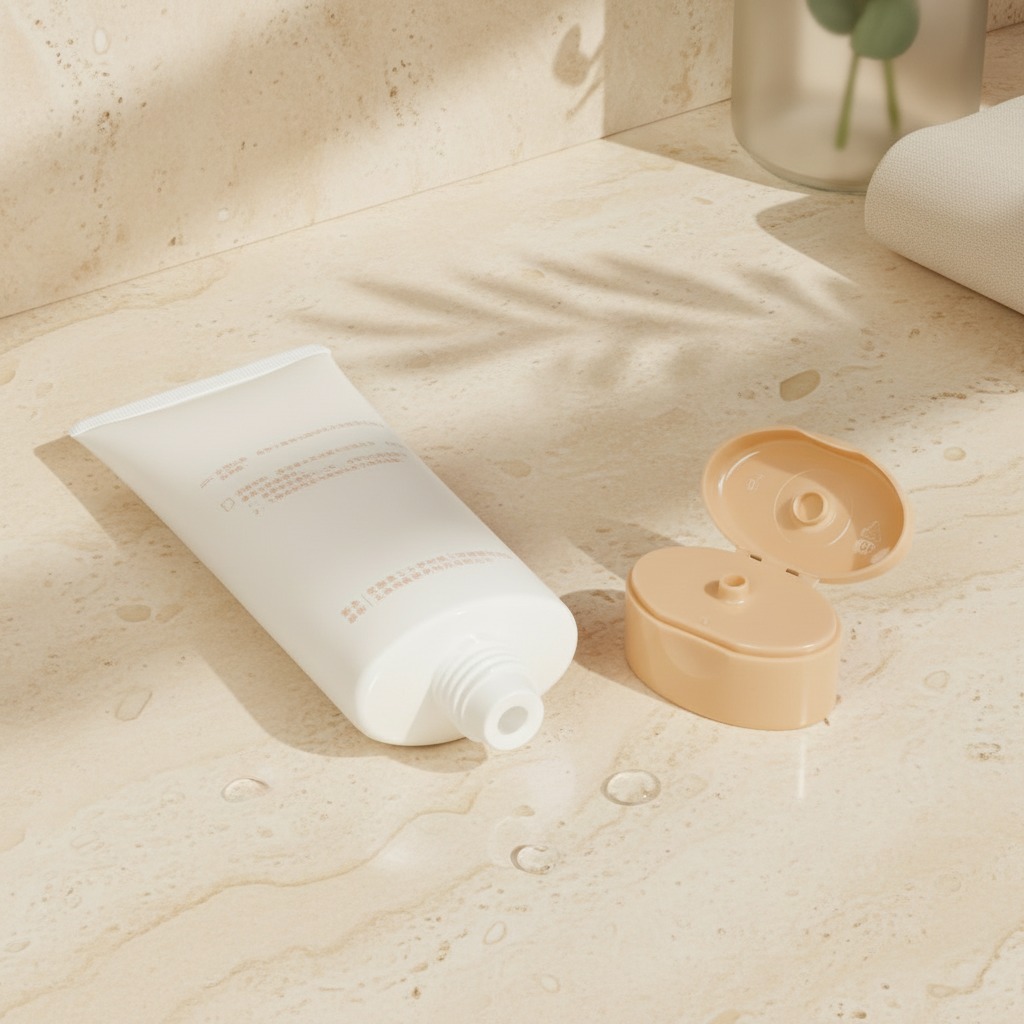
Product Overview and Visual Architecture
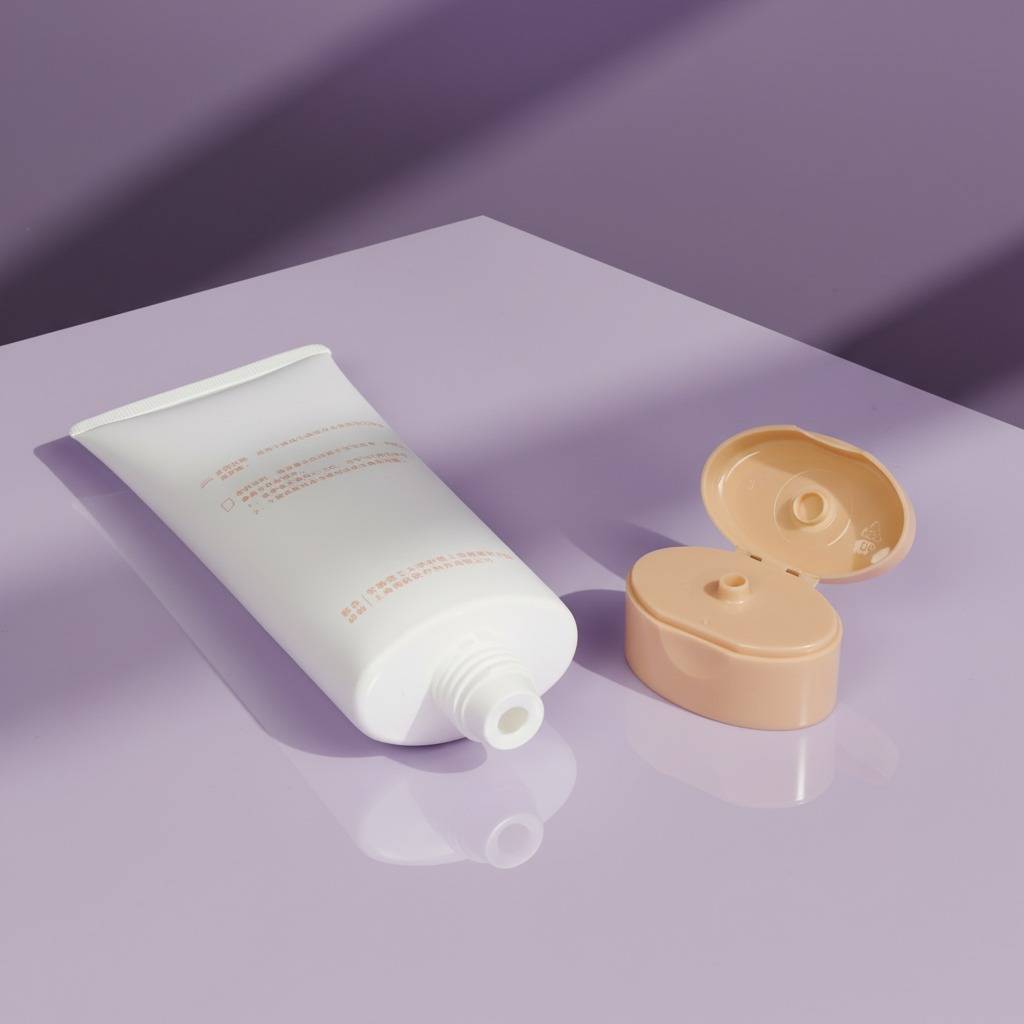
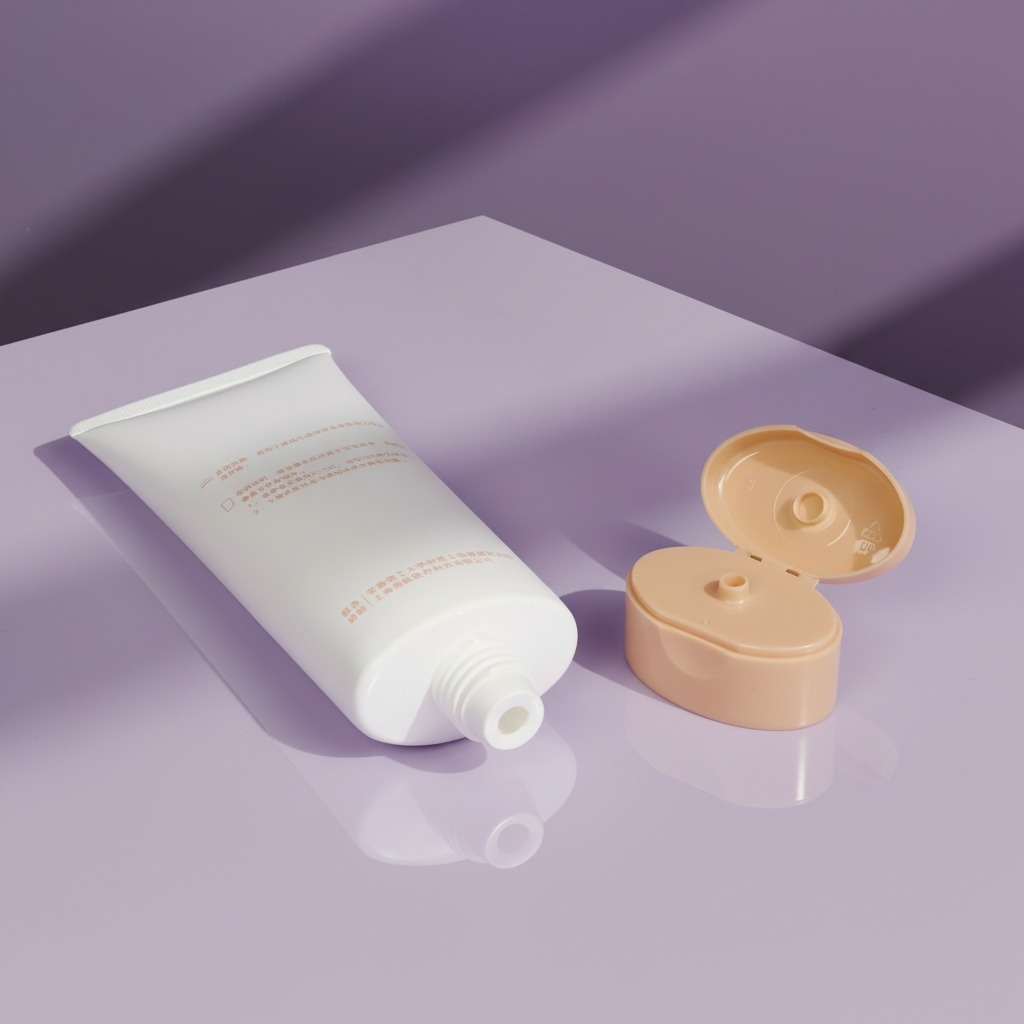
This primary packaging assembly consists of an opaque white flexible tube body and a coordinating peach-tinted flip-top closure. Designed as an unfilled component set for contract packaging and brand-level filling lines, the structure features a cylindrical profile that flattens progressively toward the tail, where it is finalized via heat or ultrasonic crimp sealing after filling. The upper shoulder tapers directly into a threaded neck with a centralized dispensing orifice, engineered to secure the base of the injection-molded cap.
The exterior presents a smooth, uniform matte-to-satin surface finish contrasted against the glossy interior lid of the dual-tone cap. Decorative text printed in warm terracotta tones showcases multi-line instructional typography directly across the front panel, highlighting the tube's readiness for direct-to-surface branding. While the visual sample demonstrates an oval-footprint closure integrated over a rounded shoulder, full structural dimensions, diameter ranges, and volumetric capacities vary by tooling setup and require confirmation during technical sampling.
Material Engineering and Structural Options
In industrial cosmetic tube packaging, flexible bodies are typically engineered from either extruded polyethylene or multi-layer laminate webs. A conventional plastic cosmetic tube often relies on low-density polyethylene (LDPE), linear low-density polyethylene (LLDPE), or high-density polyethylene (HDPE) blends to achieve the desired flex-memory and wall resilience. Depending on customer requirements, a cosmetic tube manufacturer can supply mono-layer sleeves for basic formulations or co-extruded multi-layer sleeves with embedded ethylene vinyl alcohol (EVOH) barriers to restrict oxygen ingress and moisture transmission.
Alternatively, brands handling volatile botanical extracts or active compounds may opt for a laminated cosmetic tube, such as plastic barrier laminate (PBL) or aluminum barrier laminate (ABL). Commercial demand also drives adoption of sustainable cosmetic tube configurations, including post-consumer recycled (PCR) resins, bio-based polymers, or mono-material polyethylene structures that facilitate circular recycling streams. Because barrier construction cannot be determined by surface inspection alone, buyers should confirm resin grades and barrier thresholds directly with their cosmetic tube supplier.
Closure Interface and Dispensing Dynamics
Dispensing functionality directly influences formula hygiene and consumer satisfaction. The featured container utilizes an oval cosmetic tube closure with an integrated hinge mechanism. This single-piece flip-top configuration eliminates detached lids, streamlining single-handed application during daily skincare routines. Threaded neck engagement guarantees mechanical retention under internal hydraulic pressure during handling.
While this unit demonstrates a standard passive dispensing orifice, alternative configurations exist throughout the packaging sector. Depending on viscosity and application area, packaging engineers can configure a custom cosmetic tube with specialized dispensing heads. These alternatives include a fine-tip cosmetic tube nozzle for targeted spot treatments, roller assemblies, or a cosmetic tube with applicator brush for targeted facial serums. For standard viscosities, traditional orifice apertures between 1.5 mm and 5.0 mm remain the industry baseline.
Manufacturing Workflow and Surface Decoration
Producing empty cosmetic tubes involves a synchronized multi-stage manufacturing workflow:
- Sleeve Extrusion or Web Seaming: Plastic resins are continuously melted and extruded into tubular sleeves, or laminated web stocks are formed into cylinders along continuous longitudinal seams.
- Heading and Shoulder Welding: Pre-molded shoulders are fused or compression-molded directly onto the extruded sleeve, forming the threaded neck and orifice geometry.
- Surface Printing and Varnishing: Sleeves pass through multi-station decoration machinery. Depending on graphic complexity, options include dry offset printing, high-definition flexography, automated silkscreen printing, and precise hot-foil stamping. A protective overprint varnish (matte, semi-gloss, or high-gloss) is applied and cured via ultraviolet (UV) stations.
- Capping: Injection-molded closures are torqued onto the threaded shoulders.
- Pack-out: Unsealed assemblies are boxed in structured honeycomb trays with open tails facing upward, ready for automated loading on rotary or linear filling equipment.
Application Scenarios
Flexible squeeze packaging serves a broad cross-section of personal care sectors. The visual design and format shown are well aligned with viscous personal hygiene and skincare lines:
- Facial Care: Well-suited as a facial cleanser tube, protecting foaming surfactants, cream-to-foam formulations, and clay-based purifying masks.
- Body and Extremity Care: Widely deployed as a hand cream tube or intensive foot balm container, where elastic memory prevents sleeve collapse.
- Hydration and Emulsions: Provides dependable lotion tube packaging for daily body balms, soothing gels, and rich moisture replenishers.
- Photo-Protection: Functions reliably as sunscreen tube packaging, shielding chemical and physical UV filters when paired with internal barrier layers.
Quality Control, Line Compatibility, and Sourcing Guidance
When evaluating a plastic cosmetic tube supply chain, technical buyers must establish stringent testing protocols before approving production runs. Key quality control checkpoints include torque-to-release benchmarks on threaded necks, hinge flex-fatigue cycles on flip-top caps, and wall thickness uniformity across the tube sleeve.
Furthermore, contract packagers must validate tail crimp integrity. Variations in resin melt indices can impact seal strength on high-speed ultrasonic sealing lines. Formula-to-package compatibility testing is equally essential: active ingredients, essential oils, and alcohol bases must be incubated with sample sleeves to detect potential swelling, stress cracking, or aroma scalping.
Whether your program calls for a conventional round cosmetic tube, an ergonomic oval profile, or an eco friendly cosmetic tube utilizing recycled feedstocks, detailed technical alignment with your packaging partner ensures that visual aesthetics match industrial performance. Contact our engineering team to review tooling specifications, request sample components, and review custom decoration capabilities for your next packaging program.