
Precision Roll-On and Stick Packaging for Modern Formulations
Finding a dependable deodorant stick container supplier is often the pivotal step between formulating an effective personal care product and successfully delivering it onto retail shelves. Cosmetic chemists and brand managers frequently encounter challenges with closure leakage, friction during application, and chemical migration when pairing active compounds with plastic packaging. Whether scaling up solid twist-up deodorant containers or deploying fluid roll-on dispensers, brands require rigid packaging that protects active ingredients, maintains structural integrity under transit pressure, and presents a clean, tactile presence in the consumer's hand.
Product Overview: Cylindrical White Roll-On Applicator
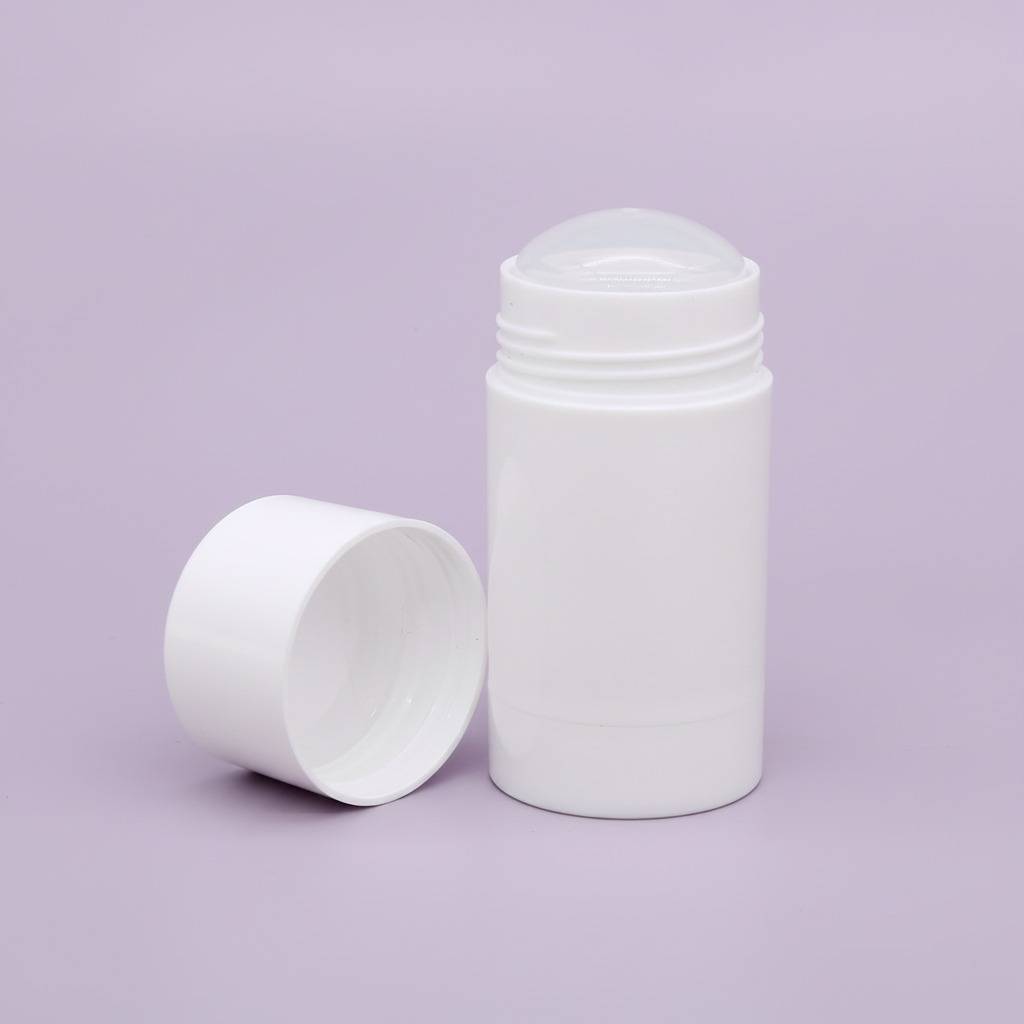
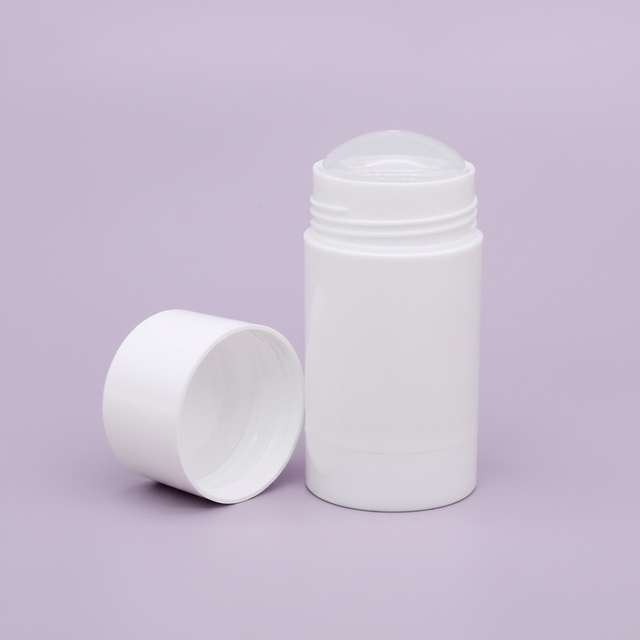
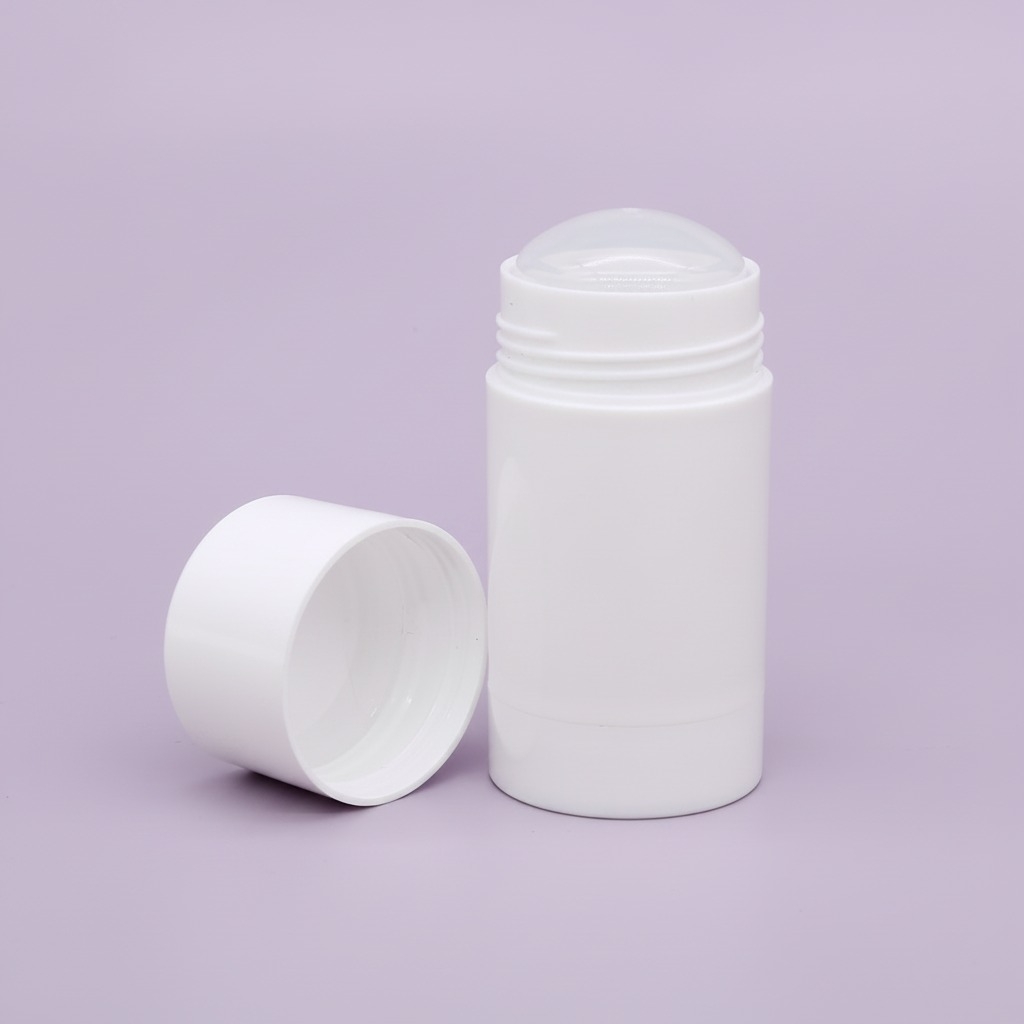
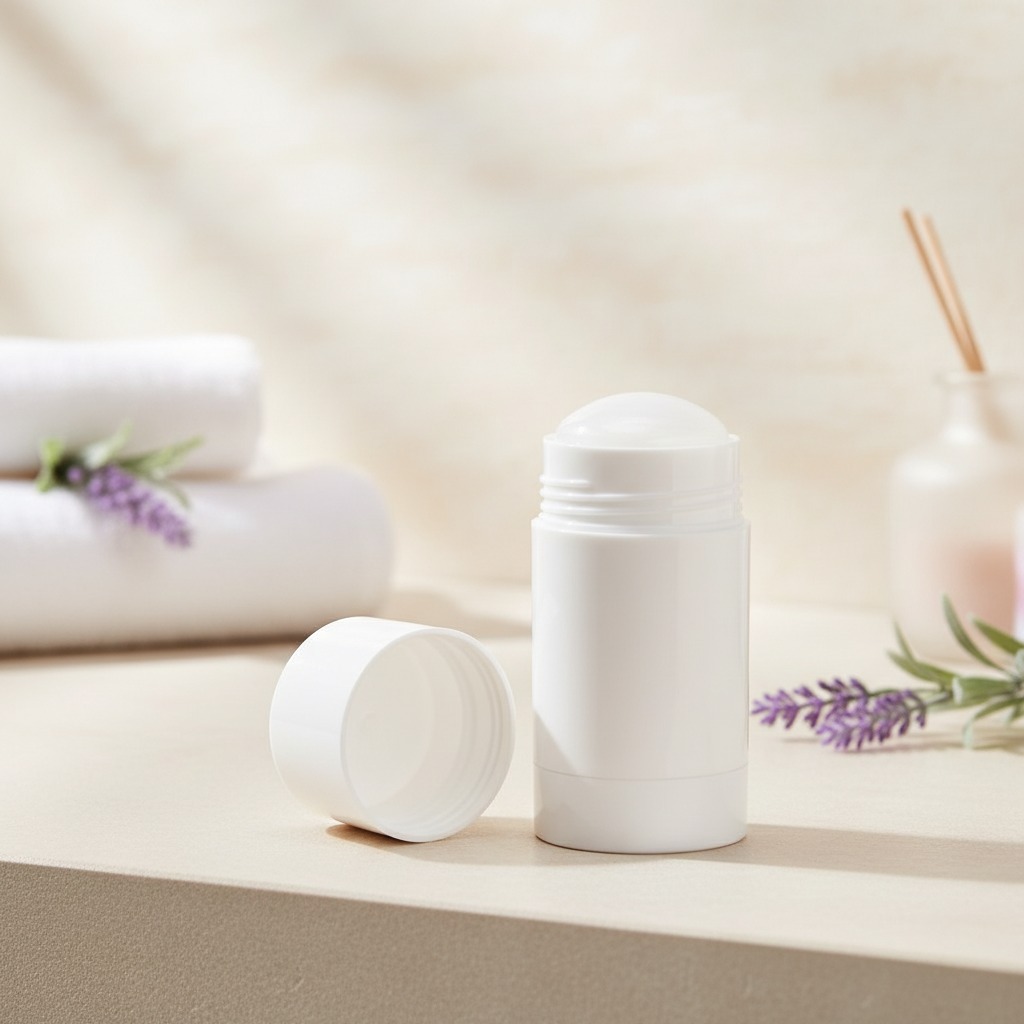
This container assembly features a classic cylindrical profile engineered for liquid, gel, and emulsion-based personal care recipes. The opaque white body stands on a broad, flat circular base that ensures upright stability along high-speed automated packaging lines and retail display tiers. Straight vertical sidewalls rise into a lightly tapered, rounded shoulder, concluding in an externally threaded neck designed to lock down a color-matched cylindrical cap.
At the crown of the container sits an integrated housing that secures a translucent roller ball. The sphere nests firmly inside the collar aperture, engineered to rotate freely under gentle contact to deliver a micro-thin, even layer of product across the skin. While standard solid formulations utilize roll-up deodorant stick tubes or bottom-wheel elevators, this roll-on architecture provides targeted dosing for lighter antiperspirant serums, liquid emulsions, soothing skin tonics, and topical remedies.
Key Specifications and Construction Details
The visible component architecture consists of three principal parts: the main reservoir body, the precision-seated applicator sphere, and the threaded closure. As a specialized personal care packaging manufacturer, tooling is configured to balance component engagement with ease of consumer operation.
- Vessel Form: Straight-walled circular column with a flat base and smooth shoulder transitions, providing an optimal surface for secondary labeling.
- Dispensing Mechanism: Captive rolling sphere held securely by an upper retaining lip, minimizing excess pooling while facilitating controlled liquid transfer.
- Closure Profile: Continuous thread design with vertical gripping depth to ensure tight seal engagement over the applicator ball.
- Coloration & Opacity: Solid white pigment dispersed throughout the resin matrix to shield sensitive formulations from ambient light penetration.
- Physical Sizing Note: Specific millimeter dimensions, brimful fluid volumes, wall thickness distributions, and roller ball diameters depend on individual mold configurations and require sample verification against technical datasheets.
Materials and Surface Treatment Options
The container body and cap are molded from opaque packaging-grade plastics, most commonly high-density polyethylene (HDPE) or polypropylene (PP). These polymers provide proven resistance against alcohols, surfactants, natural fragrances, and active mineral salts often present in deodorant chemistry. Polypropylene caps provide clean thread engagement and hinge rigidity, while polyethylene reservoirs offer impact resistance against drops on bathroom tile.
For brands targeting sustainable retail footprints, a reputable deodorant packaging manufacturer can often adapt production to integrate post-consumer resin (PCR) or recyclable polyolefin streams. When sourcing recyclable deodorant stick packaging or eco-friendly deodorant containers, verify polymer recycling stream classifications (such as standard Resin Identification Code 2 or 5) directly with our technical team prior to full production runs.
Manufacturing and Tooling Processes
Fabrication typically relies on two core processes: extrusion blow molding (EBM) or injection blow molding (IBM) for the reservoir bottle, combined with high-cavitation injection molding for the closure and the roller fitment housing. During body fabrication, molten parisons expand into chilled cavity tools, yielding uniform wall sections and defined base geometry. Thread surfaces are held to tight tooling tolerances to maintain consistent seal pressure.
The roller fitment is produced with precise dimensional tooling. The clearance between the sphere and the housing cavity determines fluid delivery volume; insufficient tolerance restricts rotation, whereas excessive clearance invites perimeter leakage during shipping. Once formed, components pass through deflashing and automated sorting before nested packaging.
Application Scenarios and Formulation Fit
While primary stick product lines require twist mechanisms, liquid-dispensing bottles complement broader lines managed by a deodorant stick packaging supplier. Common applications include:
- Liquid & Gel Antiperspirants: Controlled spreading of water- and alcohol-based aluminum formulations.
- Natural Mineral Serums: Dispensing witch hazel, magnesium, and essential oil-infused underarm treatments.
- Private Label Deodorant Packaging: Ready-to-fill standardized packaging for emerging indie cosmetic houses and salon collections.
- Targeted Skin & Wellness Applicators: Handheld vessels for cooling muscle liniments, anti-chafing emulsions, and spot blemish care.
- Travel and Sampling Formats: Compact silhouettes sized for portable bags, gym kits, and airline carry-on allowances.
Quality Control and Component Integrity
Rigorous quality protocols ensure that packaging operates flawlessly on automated filling tracks and during end-user routines. A reliable bulk deodorant packaging supplier tests components across several mechanical benchmarks:
- Thread Engagement and Removal Torque: Testing ensures caps screw down securely to prevent evaporation without requiring excessive grip strength to open.
- Fitment Retention: Applicator collars must withstand substantial vertical downward pressure without collapsing into the bottle reservoir.
- Roller Rotation Uniformity: Spheres undergo drag and spin evaluations to verify consistent liquid pick-up without catching or seizing.
- Visual Surface Audits: Visual checks monitor sink marks, parting lines, color uniformity, and gate flash across production batches.
Customization, Decoration, and Brand Adaptation
As an experienced cosmetic packaging supplier, we assist contract packagers and brand owners in transforming neutral white blanks into distinct retail centerpieces. The smooth cylindrical body accommodates several decorative processes:
- Screen Printing: Direct ink application providing sharp typography and scuff-resistant multi-color graphics across the curvature.
- Pressure-Sensitive Labeling: Application of clear, matte, or metallic film labels onto the straight sidewall area.
- Custom Color Matching: Injection masterbatches tailored to custom brand shades for both cap and container body.
- Surface Finishes: Options for soft-touch matte textures or clean, high-gloss external luster depending on mold finishes.
Buyer Decision Factors for Commercial Orders
When selecting a deodorant stick tube manufacturer or wholesale deodorant stick containers partner, contract packagers must weigh multiple technical variables against logistical needs:
First, confirm formulation viscosity compatibility. Low-viscosity roll-on formulas behave differently than heavy gels, requiring validation with the roller ball clearance. Second, assess filling line automation: check whether the bottle neck geometry accepts top-fill nozzles and if fitment insertion occurs inline or pre-assembled. Finally, evaluate minimum order quantities (MOQs), palletization arrangements, and delivery lead times. Sourcing through an established personal care packaging manufacturer ensures documentation continuity for regulatory dossiers and batch-to-batch polymer consistency.
Request Specifications and Sample Evaluation
Whether you require empty cosmetic stick containers for solid formulations or roller assemblies for liquid care lines, our team provides technical guidance and prototype evaluation kits. Contact our engineering desk to discuss wholesale deodorant stick containers, sample compatibility testing, custom tooling, and supply timelines for your upcoming packaging launch.