
Product Overview
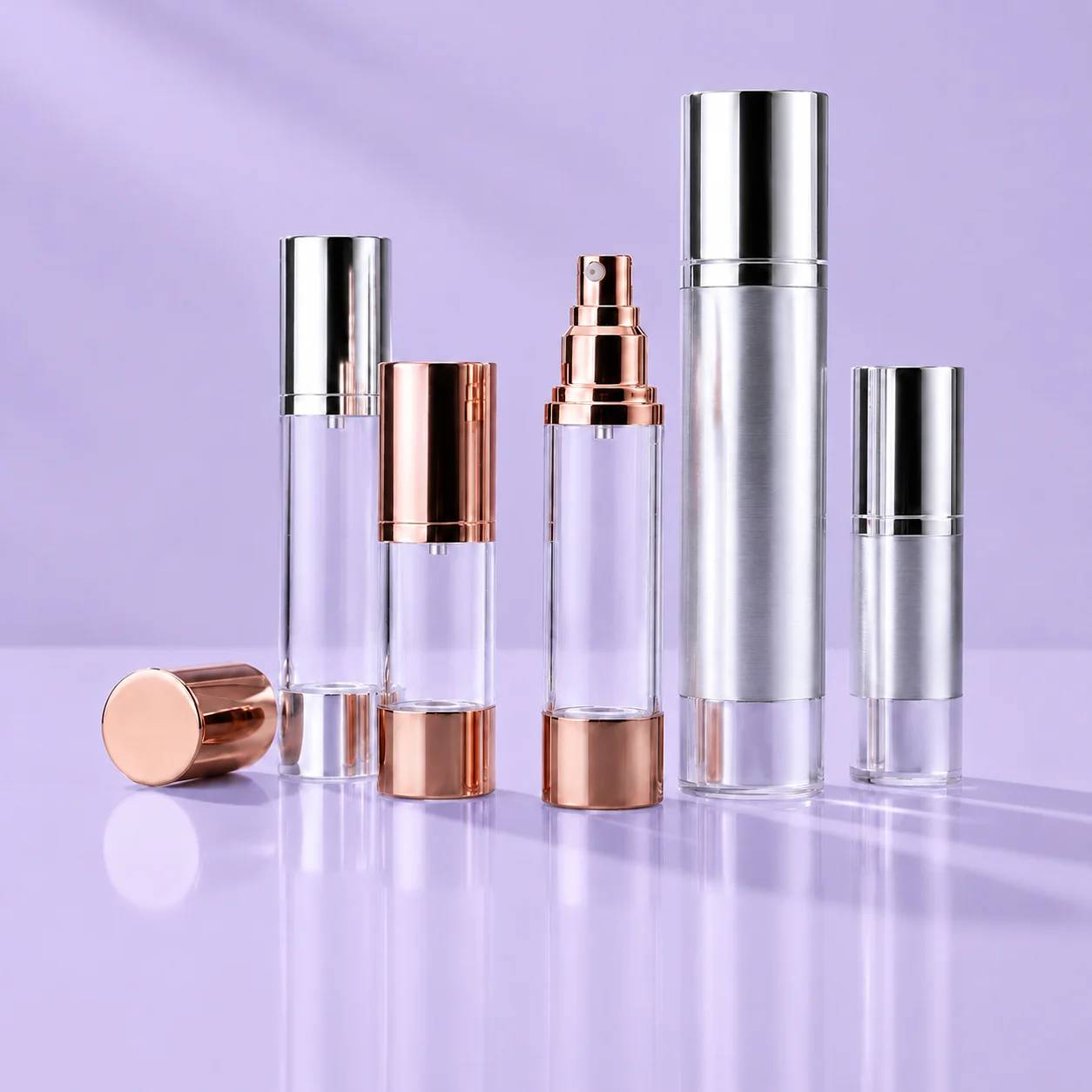
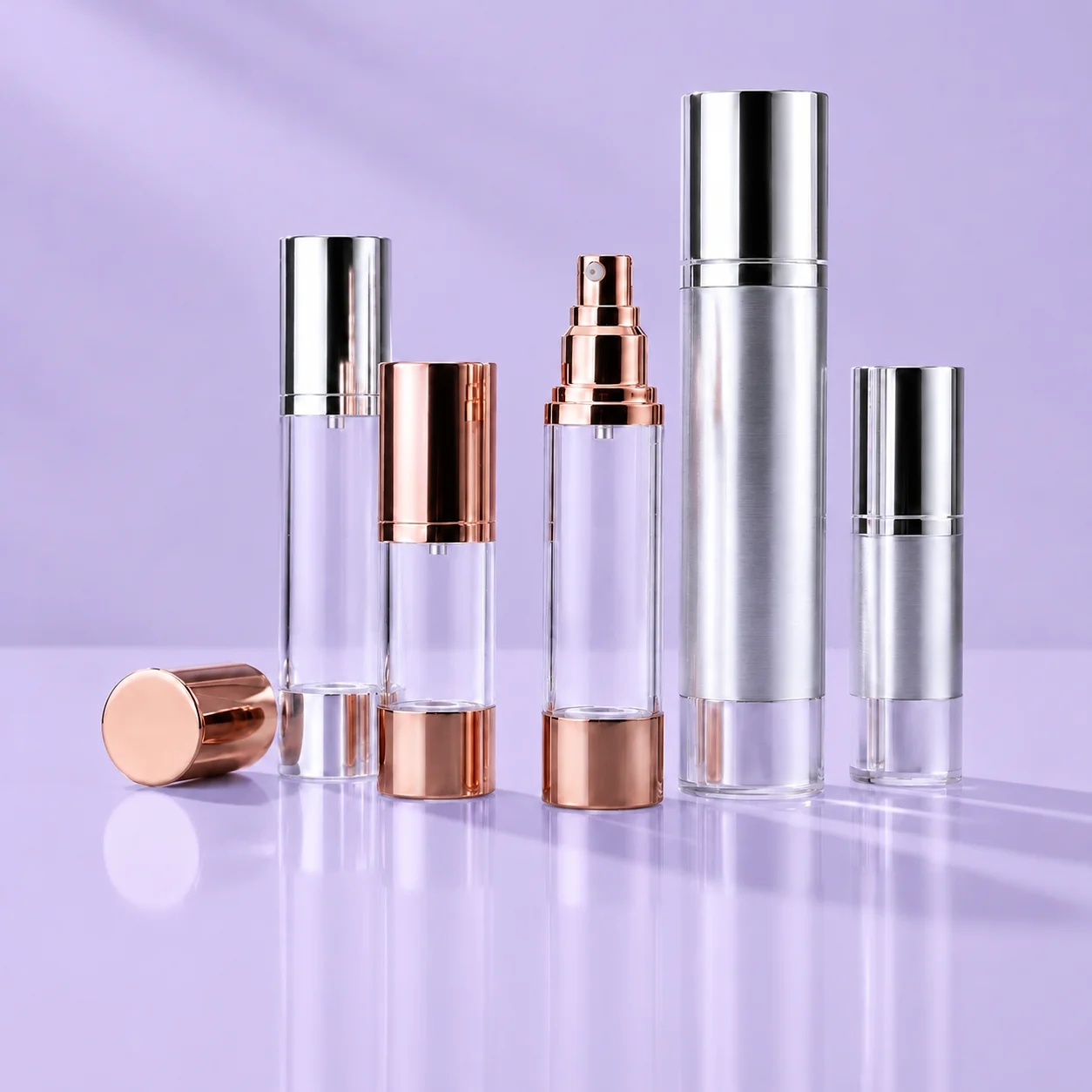
If you are evaluating an Aluminum Airless Bottle for skincare, fragrance, or personal-care liquids, the main buying problem is usually the same: you need packaging that protects the formula, looks premium on shelf, and dispenses cleanly without creating a cluttered presentation. This style of bottle is often chosen by brands that want a modern, metallic appearance with a compact cylindrical shape, especially for products such as serum, essence, lotion, toner, facial mist, or travel-size cosmetics. Based on the visible product set, the packaging here appears to be a coordinated group of cosmetic containers with clear body sections and metallic-looking caps, including one spray/atomizer-style top. The exact internal structure and whether any unit is truly airless cannot be confirmed from the image alone, so buyers should verify the pumping system before use.
For private-label and OEM packaging projects, this type of container can solve several practical issues at once: it helps present the product clearly, supports a consistent brand look across a set, and gives customers a familiar format for daily use. The design is simple, but that simplicity is part of its value. Straight cylindrical walls, flat bases, and reflective cap finishes create a neat retail-ready appearance without adding visual noise.
Visible Design Features
Cylindrical Format and Clean Proportions
The bottles in the set appear tall and slim, with a mostly cylindrical geometry. That shape is common in cosmetic packaging because it is efficient to store, easy to handle, and visually balanced on display. A narrow profile can also be useful for travel kits, sample sets, and promotional bundles where shelf space matters.
Transparent Body Sections
Several units show clear lower bodies, which allow the contents or fill level to be seen. For beauty products, that can be useful for product visibility and for helping users judge remaining volume. It also supports brand presentation when the formula itself has an appealing color or texture. The visible materials could be plastic or glass, but that exact point is not confirmed, so it should be checked during sourcing.
Metallic-Look Caps and Decorative Finishes
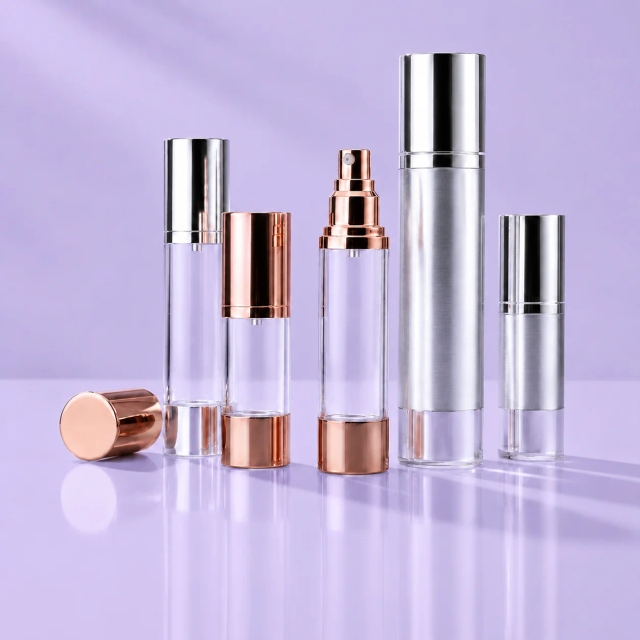
The set includes silver and rose-gold looking cap elements, plus one brushed or satin-style silver cylinder. These finishes are useful when a brand wants a more polished premium look without moving to a more complicated packaging structure. Decorative cap finishing can influence shelf appeal as much as the bottle body itself, especially in skincare and fragrance categories where first impressions matter.
Spray/Atomizer Component
One unit clearly has a spray pump head, which suggests use for mist, fragrance, toner, or similar liquid products that need atomized dispensing. In practical terms, this gives the packaging set more flexibility. A brand can use the same visual language across different product types while choosing a spray format for one formula and a capped format for another.
Key Specifications and Capabilities to Confirm
Because the exact construction is not visible, it is best to treat the following as buyer checkpoints rather than assumed features:
Body material: confirm whether the bottle is aluminum, glass, acrylic, or another plastic-based structure with metallic finishing.
Capacity: verify the fill volume for each size before planning a product line or sample program.
Closure type: check whether the cap is screw-on, snap-on, or paired with an inner liner or pump assembly.
Dispensing system: confirm whether the spray unit is a fine mist, a standard atomizer, or another pump style, and whether it is suitable for the intended formula viscosity.
Refillability: do not assume the bottles are refillable or non-refillable unless the supplier states it clearly.
Compatibility: evaluate formula interaction with the body material, decorative finish, and sealing parts, especially for products containing alcohol, oils, or active ingredients.
For brands sourcing an Aluminum Airless Bottle style package, these details matter because the look of the package is only one part of the decision. The filling line, product viscosity, and desired user experience can change the right closure choice.
Materials and Finish Options
Visible finish options in the set include glossy metallic surfaces, silver tones, rose-gold accents, and a clear transparent lower section. In cosmetic packaging, these visual treatments are often used to separate product ranges, highlight limited editions, or create a consistent line of SKUs with a shared design system. A brushed silver appearance can communicate technical simplicity, while a rose-gold tone often leans more decorative or gift-oriented.
If you are developing a coordinated product family, you may be able to mix different finish combinations while keeping the same bottle shape. That approach is useful when a brand wants one visual architecture for day cream, serum, mist, and sample packaging. The unified silhouette helps the collection look deliberate, even when capacities vary.
Manufacturing and Assembly Considerations
The exact process is not visible, but packaging like this is commonly produced through a combination of bottle forming, decorative finishing, and component assembly. Depending on the actual substrate, the body may come from glass production or injection-molded plastic manufacturing. Metallic-looking parts may be finished through coating, plating, or other decorative surface treatment methods. The spray head is then assembled as a separate dispensing component.
For buyers, the important point is not the process name alone, but whether the final package matches the intended brand use. Check the fit between body, cap, and pump; ask how the components are assembled; and request samples if the liquid formula is sensitive to sealing quality or material contact. If the package is intended for a premium retail launch, inspect surface consistency, thread alignment, and visual uniformity across the batch.
Application Scenarios
This packaging style is suitable for several beauty and personal-care uses:
Perfume and fragrance packaging, especially for compact or travel-oriented formats.
Facial mist and toner bottles that need a spray or atomizer function.
Serum and essence packaging where the bottle presentation should feel clean and modern.
Lotion or emulsion containers where a capped format is preferred.
Sample bottles and promotional sets for product launches, events, or retail gifting.
Private-label cosmetic packaging where a brand wants a unified family look across multiple products.
The clear-and-metallic combination is particularly useful when the formula itself has a visible color, because the bottle lets the content become part of the branding. At the same time, the metallic cap gives the package a more finished appearance than a plain utility container.
Quality Control Points
Good cosmetic packaging is judged not only by appearance, but by repeatable assembly and day-to-day usability. When sourcing this type of bottle, buyers should check several basic quality points:
Visual consistency of the transparent body and decorative metal-look finish.
Smooth cap fit and correct alignment with the bottle neck.
Uniform spray function on atomizer units, if a mist bottle is included.
Surface cleanliness, especially if the bottle will be filled with premium skincare or fragrance.
Packaging stability on a flat surface so retail display remains tidy.
Compatibility of the closure with the planned liquid formula.
Because hidden performance details cannot be confirmed from the image, it is wise to request samples and perform formula testing before moving into mass production. This is especially important if the product contains volatile ingredients, oils, or active ingredients that may interact with seals or internal parts.
Customization Guidance for Buyers
Custom cosmetic packaging usually starts with the function first and the visual design second. Before placing an order, define the product type, the required dispensing method, the expected shelf life, and the target market position. A serum in a dropper-like or pump format may need a different closure than a face mist. A fragrance SKU may need a more refined atomizer. A lotion product may need a stable capped container with a larger fill capacity.
If you want the package to support a premium brand image, consider these custom directions:
Choose a coordinated cap finish across the full range for visual consistency.
Use transparent body sections when product color or fill level matters to the customer.
Select sizes that align with retail, travel, and sample use cases.
Confirm logo placement, label area, and print compatibility early in the development stage.
Ask whether the bottle can be adapted into a true airless design if formula protection is a requirement, rather than assuming the visible design already includes that function.
Buyer Decision Factors
When comparing packaging options, the right choice is usually the one that balances appearance, function, and production practicality. A buyer should evaluate whether the container suits the formula, whether the closure is easy for the end user, and whether the overall look matches the brand positioning. If the product will sit on retail shelves, surface finish and proportion matter. If it will be used in kits or on the move, compact size and reliable closure become more important. If the formula is sensitive, sealing and material compatibility move to the top of the list.
For brands considering an Aluminum Airless Bottle style package, the best next step is to compare the visible design against the real technical requirement. If the project needs airless dispensing, request confirmation of the inner structure. If the project mainly needs a premium metallic look and neat cosmetic presentation, this style may already be close to the desired direction.
Request Samples and Finalize Your Packaging Plan
If you are planning a skincare, fragrance, or personal-care launch, start by confirming your liquid type, fill volume, and dispensing method. Then request samples of the bottle, cap, and pump combination so you can test fit, appearance, and compatibility before production. A well-chosen cosmetic container can reduce packaging issues, improve shelf presence, and make the product easier for customers to use.
Share your formula details, required capacity, and branding goals to move from concept to a packaging solution that fits your product line.