
Product Overview
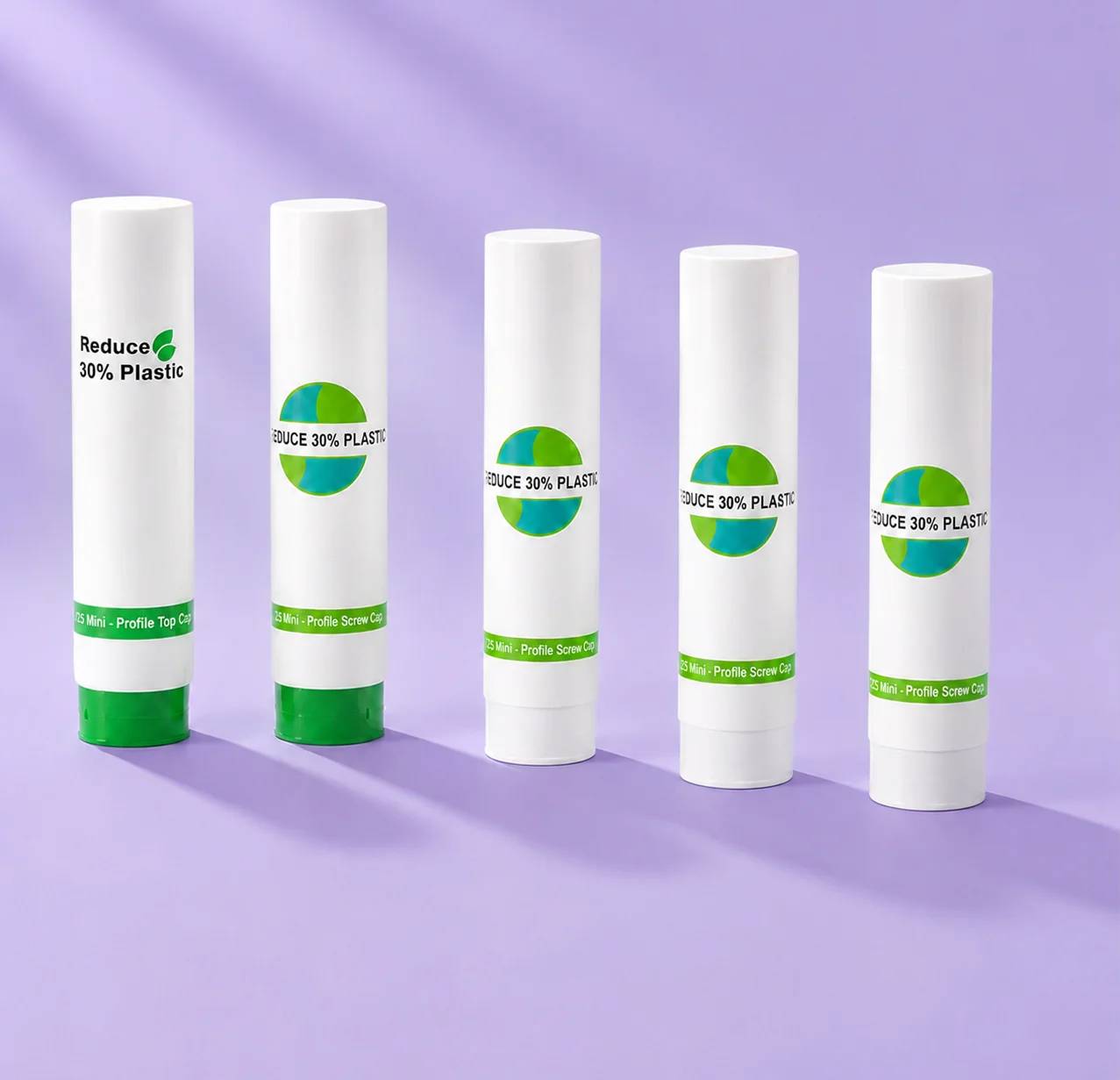
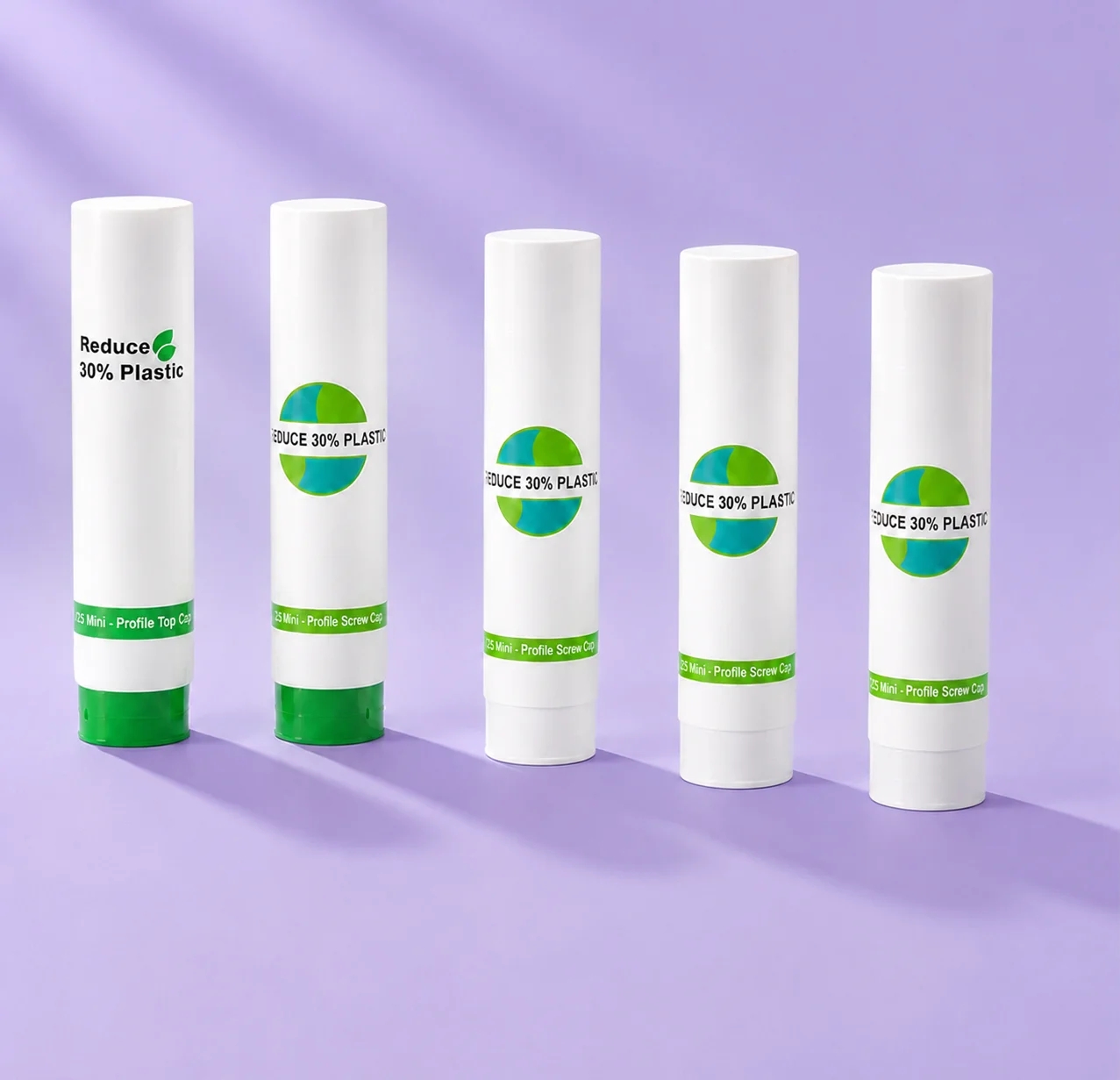
Cosmetic Soft Tubes help brand owners package semi-solid and solid personal-care formulas in a compact, easy-to-carry format. For buyers who need a neat retail package for lip balm, deodorant, sunscreen stick, or solid skincare, this style solves a common problem: how to protect the formula, present it clearly on shelf, and give consumers a container that feels convenient in daily use. The slim cylindrical shape in the reference image suggests a packaging family designed for portable stick products or similar personal-care applications, with multiple height and cap variants shown for product development and branding flexibility.
From a commercial standpoint, this type of tube works well when a brand wants a small footprint, a controlled dispense format, and a surface that can carry printed identity elements such as logos, product names, or simple claim graphics. The visible sample also includes text such as “Reduce 30% Plastic” and “Mini - Profile Screw Cap” on some variants; those appear to be product-marking or concept labels shown in the image, but any environmental or performance claim should still be verified by the buyer before use in marketing.
Visible Structure and Functional Design
Slim cylindrical profile
The product shown is a tall, narrow cylinder with straight sidewalls and rounded transitions at the shoulder and base. This shape is practical for handheld personal-care items because it is easy to grip, simple to display in cartons or trays, and efficient for travel-size or promotional packaging. The compact diameter also makes the package feel closer to a premium stick format than a bulky jar or bottle.
Cap and base variations
Several versions appear side by side, including white caps and a translucent green lower cap/base on one unit. That suggests the packaging can be configured in more than one closure or bottom style, which is useful when a buyer wants to test different visual identities or internal component arrangements. The image also shows wording that looks like “Mini - Profile Screw Cap” and possibly “Mini - Profile Top Cap,” though the exact mechanism cannot be fully confirmed from the image alone. In practice, closure choice matters for user convenience, product protection, and line extension planning.
Retail-ready appearance
The surface looks smooth with a matte or satin impression, and the printed green and blue circular graphics give the package a clean, modern look. This kind of decoration is common for cosmetic packaging because it balances visual simplicity with enough brand presence to stand out in a crowded shelf set.
Key Specifications and Capabilities
Because the provided data comes from an image, the exact measurements are not confirmed. Even so, several functional characteristics are visible or strongly suggested by the packaging format:
- Tall, slim cylinder for portable use
- Multiple height or closure variants shown in one set
- Smooth outer body suited to printing or label decoration
- White primary color with optional green accent parts
- Concept text indicating a reduced-plastic packaging direction
- Designed for cosmetic or personal-care stick products
For sourcing teams, the most important capability question is compatibility with the intended formula. A stick-style cosmetic package must match the product’s fill behavior, firmness, and dispensing method. Buyers should confirm whether the container is intended for direct fill, assembled with an internal component, or paired with a specific applicator or push-up structure.
Materials and Finish Options
The exact substrate is not identified in the image, so it would be unsafe to claim a specific resin. What can be seen is a smooth, molded-looking surface with a white finish and selective green accent pieces. In custom cosmetic packaging, this type of tube is commonly produced from plastic components and then decorated by printing, labeling, or color matching. Depending on the project, a buyer may request a glossy, matte, or satin appearance, opaque or translucent parts, and a brand-specific color palette.
The “Reduce 30% Plastic” text visible on one sample suggests a lighter-weight or material-reduction concept. That may be relevant for brands seeking lower material usage, but any sustainability statement should be backed by actual product specifications, testing, or supplier documentation. If the claim is important for your label or online listing, request confirmation before approving artwork.
Manufacturing and Decoration Process
For this kind of product, the likely manufacturing route is custom cosmetic packaging production using molded plastic components, followed by decoration. In many projects, the body, cap, and base are formed separately and then assembled. Printing or label wrapping is then used to apply brand graphics, product naming, and regulatory text where needed.
Decoration options often depend on the package geometry. A straight cylindrical body is generally favorable for screen printing, hot stamping, sleeve labels, or pressure-sensitive labels. The visible design in the image appears to use printed circular logos and band graphics, which is a straightforward way to keep the package clean while still giving it a branded identity.
For buyers developing a new line, the manufacturing flow usually includes concept approval, sample confirmation, artwork alignment, pilot production, and final mass production. If the package will be filled with an active cosmetic formula, compatibility checks should happen before full launch so the container and product perform together as intended.
Application Scenarios
Cosmetic Soft Tubes are suitable for a range of personal-care formats where portability and controlled use matter. Common application scenarios include:
- Lip balm and lip care sticks
- Deodorant or anti-odor personal-care formats
- Sunscreen sticks for travel or outdoor use
- Solid skincare items such as balm-based treatments
- Promotional samples and trial packs
- Prototype packaging for new product development
This format is especially useful for brands launching in retail, e-commerce, or gifting channels. The package can communicate a clean, compact, on-the-go image without requiring a large footprint in shipping or merchandising.
Quality Control Considerations
When evaluating this packaging category, buyers should focus on practical quality points rather than decorative impressions alone. Important checks include dimensional consistency, cap fit, part alignment, surface smoothness, print registration, and the uniformity of color across a production batch. If the package uses multiple parts, assembly quality becomes equally important because loose fitting components can affect consumer perception and product safety.
For cosmetic use, odor control, cleanliness, and the absence of visible defects are also important. Packaging intended for personal-care formulas should be delivered in a condition suitable for filling and final packing. If your formula is sensitive to light, heat, or air exposure, ask the supplier how the package structure supports those requirements. Since those performance details are not visible in the image, they should be confirmed through samples and documentation rather than assumed.
Customization Guidance
Buyers sourcing this type of packaging usually have several customization paths. You may adjust the tube height, cap style, base design, body color, logo placement, and label coverage. If the goal is a premium cosmetic look, a restrained color system with precise printing can work well. If the goal is a mass-market or promotional launch, simpler decoration and stronger color contrast may improve shelf readability.
It is also wise to think about the fill process early. The packaging should fit the product’s intended use, filling temperature, and dispensing behavior. If your formula is a softer balm, the internal structure and closure choice need to support handling without deformation. If your line includes multiple SKUs, a family look can be created by keeping the same body profile while changing cap colors or printed bands.
For sustainability-focused projects, ask for verified information on material reduction, recyclability, or any recycled-content options before approving the final artwork. The visible “Reduce 30% Plastic” note is a concept indicator, not proof by itself.
Buyer Decision Factors
When comparing suppliers or packaging options, consider the following:
- Does the package fit the formula and intended dispensing method?
- Is the visual style aligned with your brand position?
- Can the body and cap be customized without affecting production stability?
- Are printed graphics sharp and durable enough for transport and retail handling?
- Can the supplier support sample development and revision cycles?
- Are sustainability claims documented rather than only displayed as artwork?
For many purchasing teams, the best packaging choice is not simply the most decorative one. It is the version that balances manufacturability, shelf appeal, user convenience, and clear communication of the product inside.
Request a Sample or Quote
If you are developing a new stick-based cosmetic line or refreshing an existing package design, Cosmetic Soft Tubes can be a practical starting point. Share your target formula, preferred size range, artwork direction, and any material or sustainability requirements so the packaging can be matched to your project more accurately. A sample review is the fastest way to confirm fit, appearance, and branding before moving into production.