
Product Overview
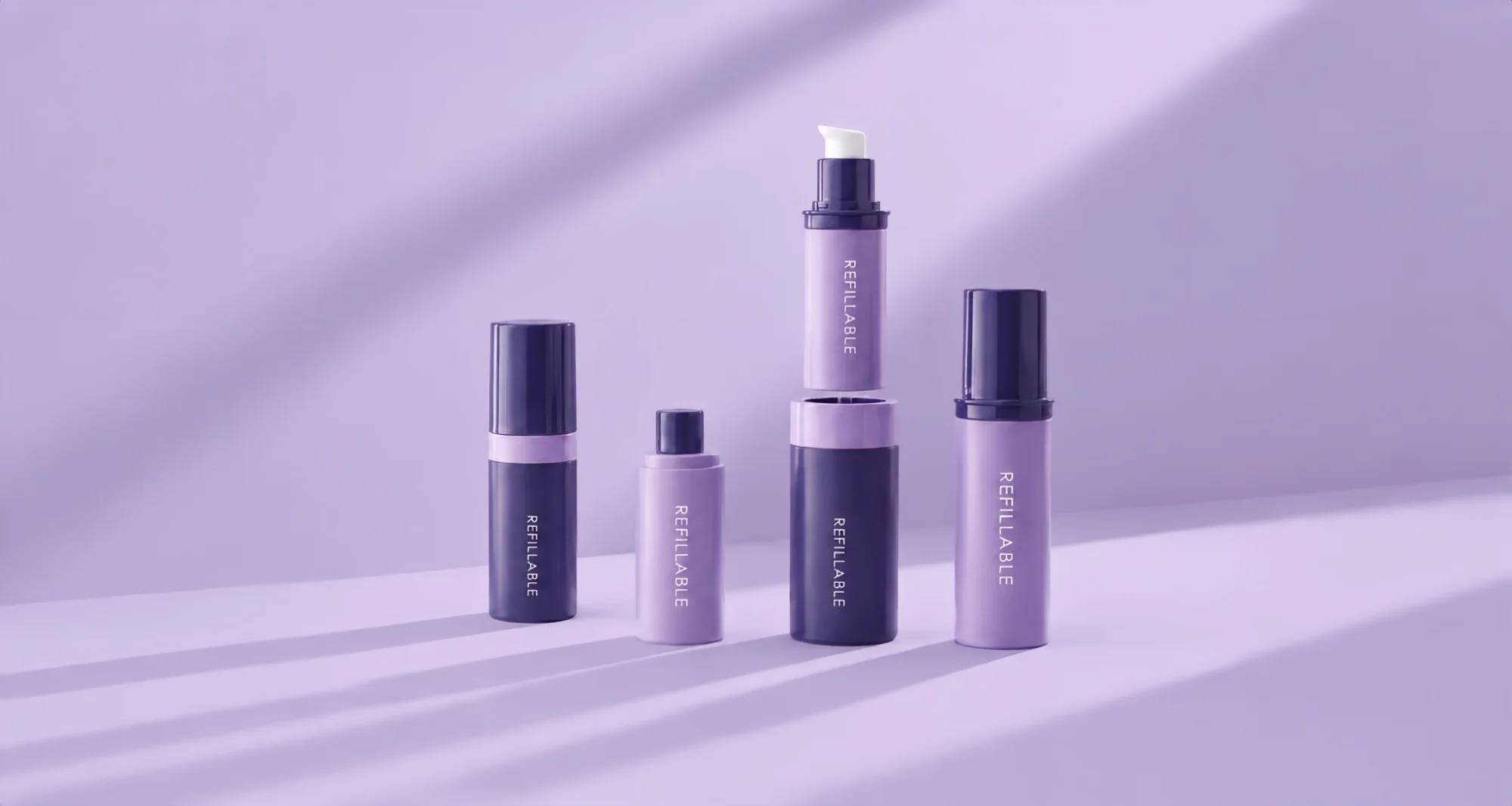
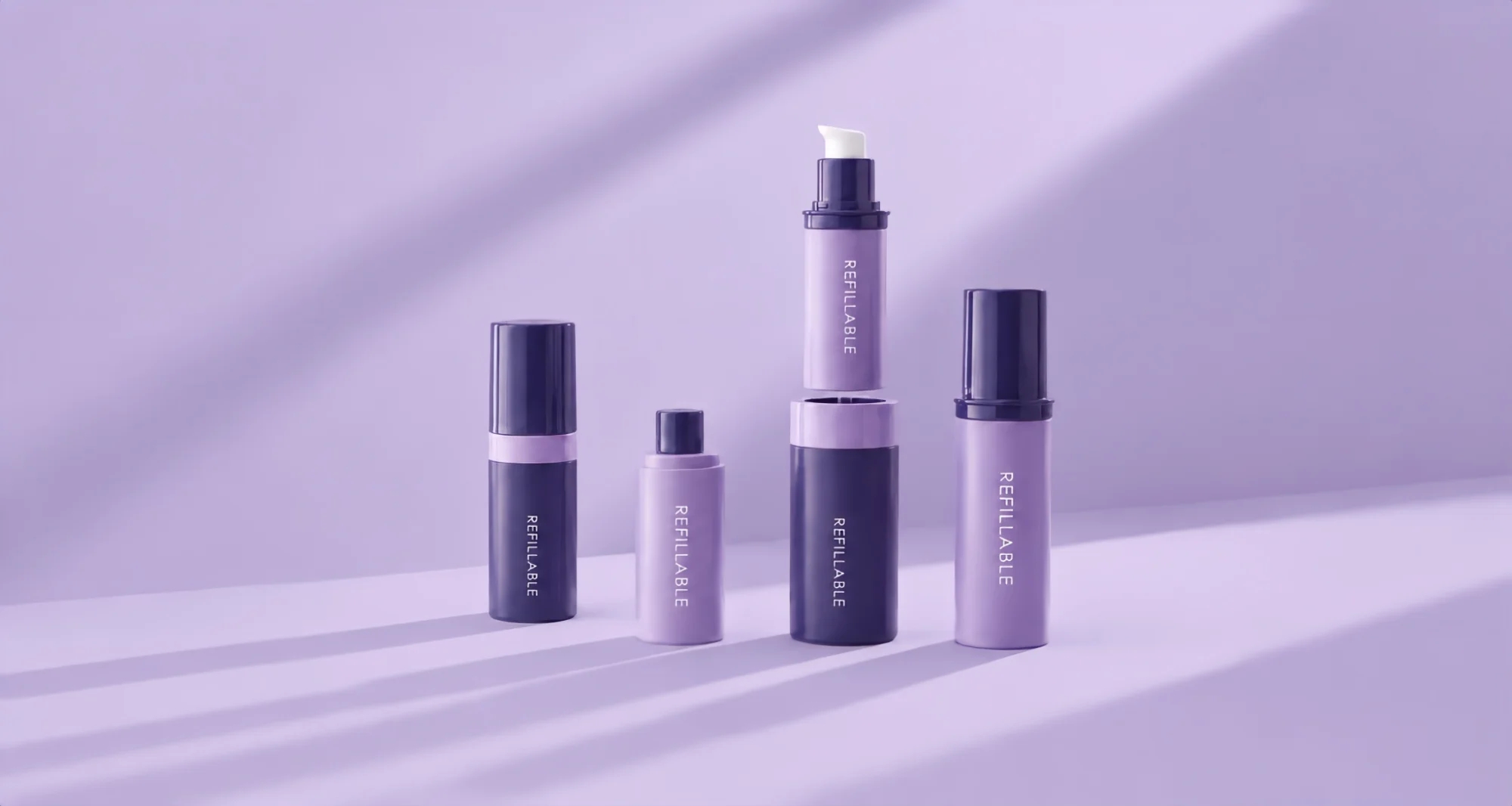
Refillable Airless Bottles are designed for skincare and personal-care brands that want reusable, premium-looking packaging without forcing buyers to replace the entire container after every use. That solves a very practical problem: reducing packaging waste while keeping the product presentation clean, consistent, and retail-ready. Based on the visible design, this product appears to be a modular refillable cosmetic bottle set with cylindrical bodies, darker caps, and one visible pump-style dispenser. The exact internal dispensing structure cannot be confirmed from the image alone, so any claim that it is fully airless should be treated as an informed inference rather than a confirmed feature.
The bottles shown have a smooth, opaque finish in soft lavender and deep purple tones, with the word “REFILLABLE” clearly printed on the body. That visual cue matters for both brand communication and end-user understanding. It tells the buyer immediately that the package is meant for repeated use, and it helps position the product as part of a sustainable or refill-based line. For skincare brands, serum makers, and other personal-care companies, this kind of packaging can support a better shelf story without making the design look technical or bulky.
Key Specifications and Functional Capabilities
The visible structure suggests a cylindrical bottle format with separate cap and dispenser components. The outer shell looks like a stable, molded container intended for liquid or semi-liquid formulas. One unit includes a white pump actuator or nozzle, which indicates compatibility with pump dispensing for products such as lotions, creams, serums, and other cosmetic liquids. Because the product is modular in appearance, it may support multiple sizes or configurations, but the exact capacity and internal mechanism are not visible and should be confirmed before ordering.
From a buyer’s perspective, the main functional advantages are straightforward. A refillable system allows the customer to keep the outer package while replacing the product insert or inner bottle. That can improve repeat usage, reduce disposal volume, and create a more premium brand experience. If the system is truly airless, it may also help reduce product exposure to air during use; however, that performance should not be assumed unless the supplier confirms the mechanism and tests.
The visible packaging style is also suited to controlled dispensing. Pump-based cosmetic packaging is often chosen when a formula needs to be applied in measured amounts, especially for face creams, serums, or treatment products. A stable dispenser can improve usability and reduce mess at the point of application.
Materials and Finish Options
The product appears to be made from plastic components, which is common in cosmetic packaging because plastic supports efficient molding, lightweight handling, and flexible design options. Based on the image, the bottle bodies are opaque and smooth, while the caps have a darker glossy appearance. That contrast gives the packaging a cleaner, more finished look and helps the dispenser stand out visually.
For refillable packaging, material selection is important. Brands usually consider container rigidity, surface appearance, formula compatibility, and the feel in the hand. In general terms, cosmetic bottle systems may use different plastic families for outer shells, inner cartridges, pumps, and caps, depending on the formulation and intended use. Since the exact material grade is not provided, it is best to confirm the compatibility of the package with oils, emulsions, water-based serums, or thicker lotion formulas before production.
Finish options can make a significant difference in retail appeal. An opaque body helps hide the contents and creates a uniform brand color story. Gloss, matte, soft-touch, and colored molding are all common directions in cosmetic packaging, though the visible product here reads as a smooth, polished surface rather than a textured one. Printing the refillable label directly on the bottle also adds functional clarity, which is useful in store displays and for online product photography.
Manufacturing Process and Assembly
Packaging in this category is commonly produced through injection-molded plastic parts that are then assembled with pump components and closure pieces. That process allows for consistent shaping of cylindrical bodies, tight-fitting caps, and repeatable decorative details. The modular nature seen in the image suggests a design approach where the outer shell and internal dispensing elements can be separated for filling, refilling, or replacement.
Manufacturing generally begins with tool design and mold development, followed by mold trial, part sampling, and assembly verification. Once the bottle body, cap, and pump parts are produced, they are matched to ensure proper fit and user operation. In refillable systems, the design stage is especially important because the opening, thread, snap fit, or cartridge interface must support repeated use without becoming loose or difficult to close. The image does not reveal the exact closure mechanism, so buyers should request engineering drawings or samples before approving mass production.
Decoration is often added after molding. This can include screen printing, hot stamping, labeling, or direct decoration, depending on the desired branding effect. The visible “REFILLABLE” text shows that the packaging can be used not only as a container but also as a communication surface. That can be valuable for brands that want to educate users about reuse at the point of purchase.
Application Scenarios
These bottles are well suited to skincare products such as facial serums, moisturizers, lotions, and treatment creams. They also fit personal-care formulas that benefit from a neat dispenser and a polished retail appearance. If a brand is launching a travel-size range, a premium gift set, or a refill-based hero product, this style of packaging can support a strong first impression.
For retail environments, the color palette in the image lends itself to a modern beauty aesthetic. Soft lavender and deep purple are often associated with wellness, skincare, and premium cosmetic lines. That makes the package visually versatile across different market segments, from boutique skincare to mass-premium launches. The structure may also work well for samples or promotional packs where presentation matters almost as much as function.
Because the design is refillable, it can also support sustainability messaging. Brands that want to encourage repeat purchases without increasing package waste may find this format useful for loyalty programs, refill pouches, or in-store refill concepts. The exact refill method should be confirmed, but the visible construction already points toward a reusable packaging strategy.
Quality Control and Buyer Decision Factors
When evaluating this type of packaging, buyers should focus on fit, dispensing consistency, cosmetic appearance, and formula compatibility. The most important practical questions are simple: does the pump deliver the intended amount, does the closure feel secure, does the bottle protect the formula, and does the overall package look consistent across a production run?
Since the image does not show internal seals, leak resistance, or actual dispensing performance, those points should be validated through samples and testing. For cosmetic packaging, it is also wise to verify whether the inner system can be cleaned, replaced, or refilled without damaging the outer shell. If the bottle is intended for repeated use, the thread quality, actuator durability, and assembly precision matter more than a one-time use container.
Buyers should also consider brand consistency. Opaque bottles are useful when a formula’s color may vary slightly from batch to batch, because the packaging hides those differences. A uniform exterior color can make the line look more polished on shelf. If the package will be part of a premium collection, ask for finish samples and print proofs before committing to full production.
Customization Guidance
Customization is where this packaging format can become truly useful for a brand. The body color, cap color, print placement, surface finish, and dispensing style can all be adapted to match a product line. If the brand wants a minimalist look, the decoration can stay restrained. If the goal is stronger shelf visibility, the bottle can be developed in a brighter tone or with higher-contrast graphics.
When specifying custom packaging, it helps to define the formula first. A thin serum may need a different dispensing approach than a thick cream. A lotion intended for daily use may benefit from a comfortable pump stroke, while a travel product may need a more secure closure. Because the exact internal mechanism is not visible, the supplier should confirm compatibility with the intended fill material and filling process.
Brands should also ask whether the refill element is sold as a separate insert, a replacement inner bottle, or part of a complete assembled unit. That decision affects logistics, customer education, and after-sales support. Clear refill instructions, printed symbols, or simple color coding can make the user experience much smoother.
Why This Format Works for Modern Cosmetic Brands
Refillable Airless Bottles appeal to buyers because they combine three things that are often difficult to balance: visual appeal, practical dispensing, and a reuse-oriented concept. The visible product already communicates order and structure. The cylindrical shape is easy to pack, easy to display, and familiar to consumers. The darker cap and pale body create a polished contrast without looking excessive.
For manufacturers and brand owners, this is a packaging format that can support product launch, line extension, and sustainability messaging at the same time. It is not just a container; it is part of the product experience. When designed and tested properly, it can help a brand look more deliberate and more current, while giving buyers a refill pathway that feels intuitive.
Request Samples or Production Details
If you are sourcing refillable cosmetic packaging for skincare, lotion, serum, or similar formulas, request samples, closure details, and decoration options before final approval. Confirm the material, the refill method, the pump structure, and formula compatibility, especially if the package must support repeated use. A well-specified refillable system can improve the customer experience and give your product line a cleaner, more sustainable identity.