
Selecting the right airless cosmetic bottle is a critical decision for beauty brands balancing chemical formula integrity with premium retail presentation. Delicate emulsions, vitamin-rich active ingredients, and oxidation-prone skincare bases rapidly lose potency when exposed to ambient oxygen and airborne particulates. This coordinated bottle series provides an elegant barrier solution, utilizing a sealed dispensing architecture to safeguard formula stability while offering an upscale, tactile user experience on the counter or vanity.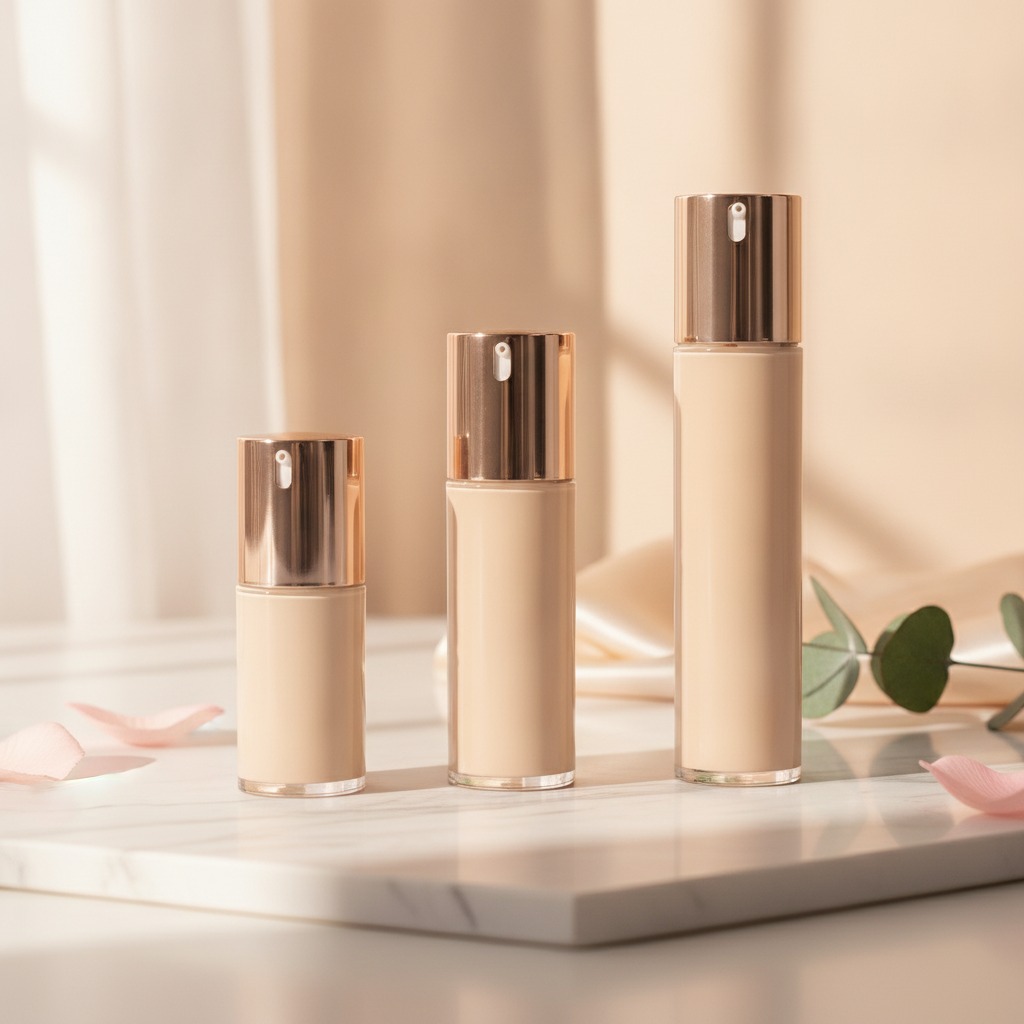
Product Overview: Multi-Tier Luxury Pump Packaging
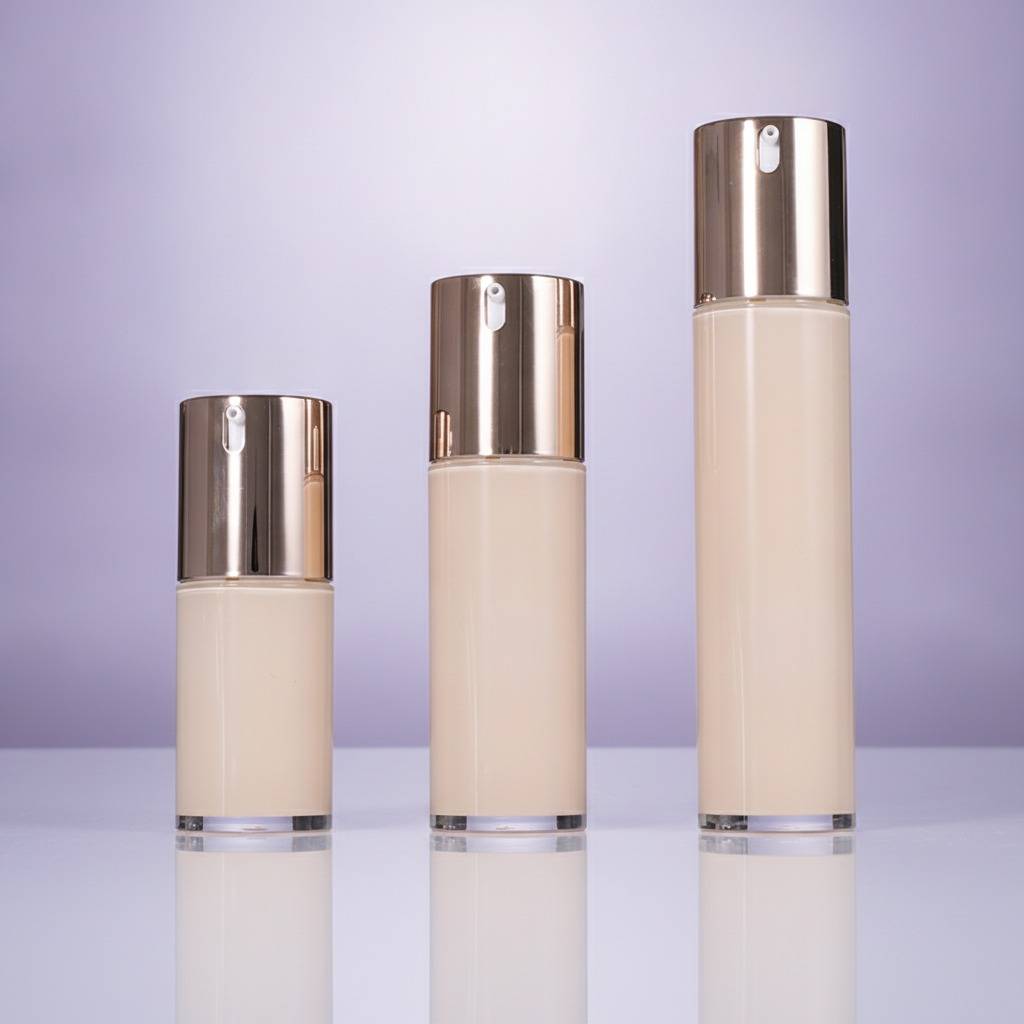
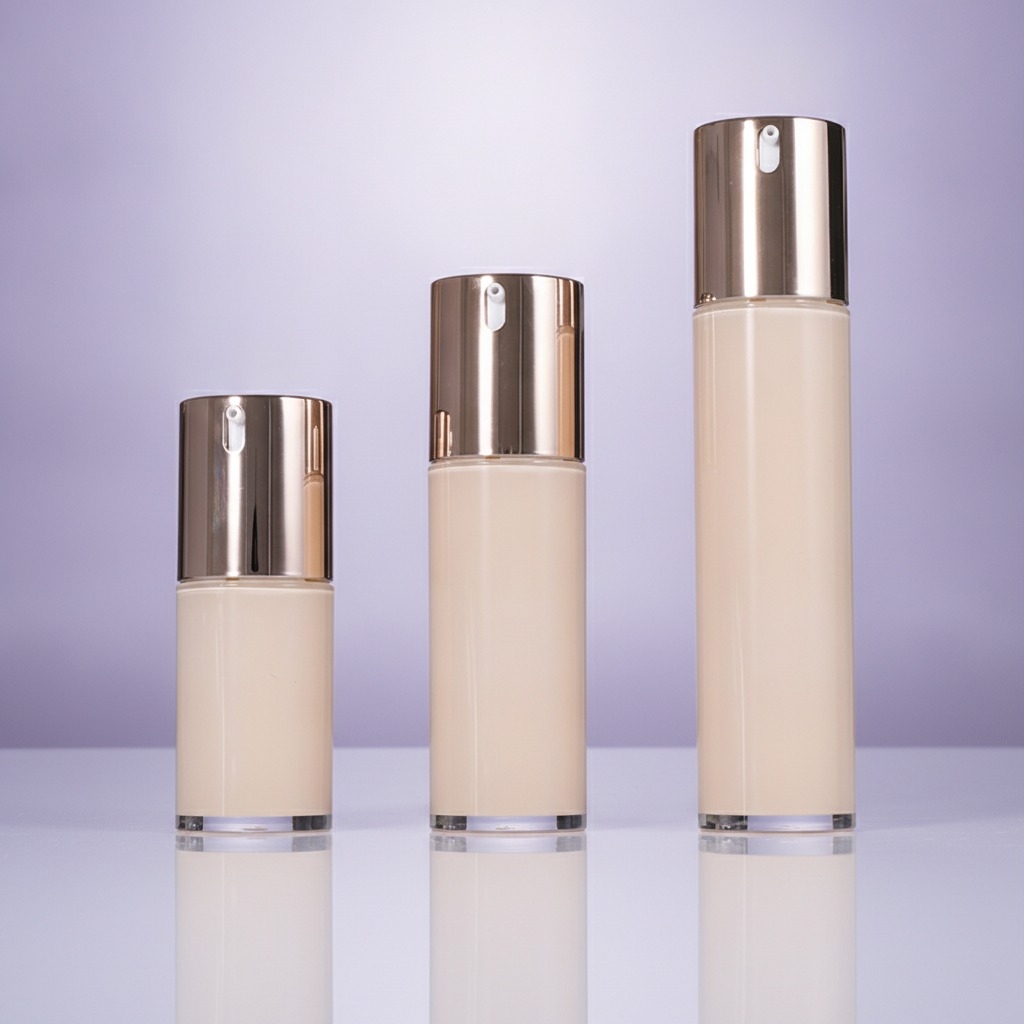
Presented as a graduated three-tier family, this packaging ensemble reflects an OEM-ready solution engineered for brand harmony across varied SKU capacities. Each unit features a straight-walled cylindrical silhouette, terminating in a flush, flat-top closure that maintains a balanced structural cadence from base to cap. The outer cylinder exhibits a subtle, pearlescent ivory sheen with a glossy lacquer, contrasted by a high-gloss champagne-gold metallic cap. At the bottom edge, a transparent reveal ring suggests a dual-wall or inserted base construction, establishing depth and visual weight that consumers instinctively associate with prestige beauty lines.
While visual inspection confirms three distinct heights—ideal for establishing tiered product lines such as eye serums, facial treatments, and body emulsions—exact internal volumetric capacities must be validated during technical sampling. Such silhouettes commonly support sizes comparable to a 30ml airless bottle and a 50ml airless pump bottle, enabling seamless line extensions under a unified brand aesthetic.
Key Architecture and Visible Structural Specifications
Unlike conventional open-neck jars, an airless dispenser bottle relies on mechanical pressure to evacuate fluid without introducing return air into the reservoir. A visible orifice at the apex of the cap assembly points to an integrated top-actuated mechanism, designed to deliver measured dosing while keeping the nozzle concealed and hygienic.
Structural Highlights
Cylindrical Symmetry: Straight, parallel vertical walls ensure effortless machine handling during inline labeling, silk-screen printing, and automated tray packing.
Concealed Actuation: The tall champagne collar conceals the internal pump head, protecting the dispensing channel from lint, debris, and accidental discharge during transport.
Multi-Part Base Construction: The clear perimeter ring at the foot of each container indicates a multi-component shell, often engineered in thick-walled packaging to enhance drop protection and structural rigidity.
Orifice Orientation: Top-dispensing geometry allows targeted product evacuation, reducing residual waste around the pump tip.
Materials, Exterior Substrates, and Finish Options
High-performance cosmetic packaging bottles must provide structural stability, impact resistance, and visual elegance. In commercial production, plastic airless bottles of this caliber frequently utilize technical polymers such as polypropylene (PP) for internal fluid contact surfaces due to its chemical inertness, alongside polymethyl methacrylate (PMMA/acrylic) or acrylonitrile styrene (AS) for outer structural components.
Outer Reservoir Finish: The body display features a soft, light-scattering pearlescent coating over an opaque substrate. This non-translucent wall shields UV-reactive formulations from direct light exposure.
Closure Metallization: The mirrored champagne-gold finish on the upper collar is typically achieved through automated vacuum metallization or high-sheen metallic UV lacquering over an injection-molded plastic core.
Internal Contact Surfaces: Exact resin composition must be confirmed via material specification sheets to ensure zero interaction between the packaging wall and complex chemical actives.
Manufacturing and Metallization Processes
Fabricating high-precision airless skincare bottles demands tight molding tolerances. The outer shells are produced using precision multi-cavity injection molding or injection blow molding to achieve a seamless, uniform cylinder without sink marks or visible weld lines.
Following molding, components undergo automated surface pre-treatment to maximize coating adhesion. The champagne caps pass through a physical vapor deposition (PVD) or vacuum metallization chamber where micro-layers of aluminum are vaporized, deposited, and sealed with a tinted topcoat to achieve the warm champagne hue. The pearlescent bottles are finished with automated electrostatic spray coatings and UV-cured to resist scuffing, friction, and exposure to cosmetic oils.
Target Formulations and Application Scenarios
Because of its protective dispensing mechanics, this platform serves as an optimal airless lotion bottle and airless serum bottle across diverse skincare portfolios. The non-reactive flow path and sealed environment prevent degradation in air-sensitive preparations.
Restorative Emulsions: Suitable for day creams, night recovery lotions, and ceramide barriers requiring sustained freshness.
Targeted Serums: An ideal airless bottle with pump for vitamin C essences, retinoids, and peptide concentrates sensitive to photolytic and atmospheric breakdown.
Fluid Pigments: Functions effectively as an airless foundation bottle, keeping fluid pigments, primers, and BB creams evenly mixed without drying around the pump tip.
Viscous Creams: Operates as an airless cream bottle for light-to-medium-viscosity formulations that require controlled single-stroke dosing.
Quality Control and Compatibility Testing Protocols
As an experienced airless bottle supplier or purchasing manager understands, mechanical dispenser packaging requires rigorous pre-production evaluation. The presence of a vacuum pump bottle mechanism or sealed piston must be verified under actual filling conditions.
Leakage and Pressure Testing: Containers must undergo vacuum chamber testing to ensure hermetic seals remain intact during air transport and temperature fluctuations.
Piston and Actuator Consistency: Stroke testing evaluates actuation force, ensuring smooth glide and uniform volume displacement per depression without sputtering.
Formulation Compatibility: Brand chemists must conduct accelerated shelf-life studies to confirm that essential oils, solvents, and preservative systems do not degrade the internal gaskets, wiper seals, or piston walls.
OEM Customization and Decorative Guidance
For enterprise buyers collaborating with airless bottle manufacturers, these unbranded display samples serve as a foundation for bespoke branding. Multiple decorative processes can be applied to align the component with brand identity guidelines:
Silk-Screen and Hot Stamping: High-resolution typography, logo marks, and descriptive copy can be added across the straight body walls using foil stamping or multi-color UV screen printing.
Custom Color Matching: The pearlescent body and metallic cap can be customized to match precise Pantone references, transitioning from warm champagne to matte silver, rose gold, or high-gloss black.
Eco-Conscious Formats: Depending on tooling availability, buyers can explore refillable airless bottle architectures with replaceable inner pods to minimize single-use resin footprints.
Strategic Procurement Considerations for Cosmetics Brands
When evaluating airless pump containers for private label collections or clinical skincare lines, sourcing managers should align production parameters with supply chain realities. Confirming pump output volumes (typically ranging from 0.15ml to 0.5ml per stroke), checking compatibility with automated rotary filling equipment, and establishing minimum order quantities (MOQs) are vital initial steps. Verifying whether the packaging format functions as a true vacuum-driven piston system or an elevated dip-tube assembly ensures that high-viscosity formulas flow reliably from the first pump to final evacuation.
Connect with Our Technical Packaging Team
Upgrade your skincare or cosmetic line with reliable, aesthetically refined airless pump bottles for cosmetics. Reach out to our packaging engineering team to request sample sets, discuss custom color metallization, verify mechanical specifications, and receive a detailed quote tailored to your production schedule.