
When brands discuss Custom Airless Bottles for Premium Skincare Packaging, the real challenge is often not simply whether the bottle looks high-end, but rather minimizing the contents' exposure to air, contamination, pump backflow, and waste before opening. For engineers, purchasing, and product teams, the value of this type of packaging ultimately lies in its stability, user experience, and mass production consistency.
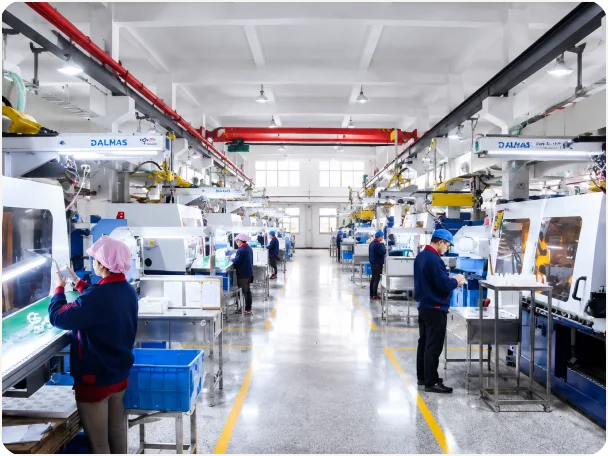
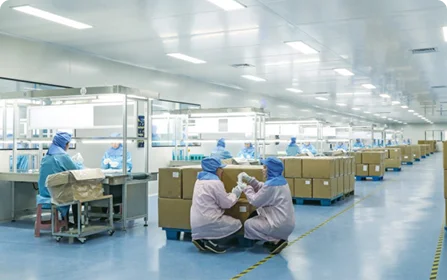
From a manufacturing perspective, the effectiveness of air isolation often depends not only on the bottle structure but also on the final assembly, inspection, and packaging environment. The multi-station, zoned, and fully cleanroom-wearing work methods you see on-site perfectly illustrate this point: completing sorting, assembly, boxing, and shipping in a clean, bright, and easily visible environment can reduce many low-level but costly problems, such as dust contamination, scratches, foreign object residue, and batch-to-batch appearance inconsistencies.
Why do high-end skincare brands choose airless structures?
Skincare products, especially serums, creams, and repairing lotions, are often sensitive to air, light, and repeated opening and closing. Traditional pump bottles tend to draw in air after use, and if the formula contains active ingredients, oils, or easily oxidized systems, the long-term user experience will deteriorate. The core idea of airless bottles is to separate the contents from external air as much as possible through pistons, pouches, or insulating chambers, making each press more like a "one-way push."
This is why custom-designed gas-free bottles are more popular than off-the-shelf generic ones. Brands want more than just containers; they also want the feel of the paint job, the capacity range, the bottle proportions, the pump head damping, the secondary sealing method, and an appearance that matches the entire visual system. For high-end lines, packaging is often part of the product's value, even more influential on the consumer's first impression than a subtle highlight on the cap.
When customizing, the first thing to confirm is not the color, but the structure.
Many buyers initially focus on surface finishes, such as matte, painted, laser-engraved, metallic, or gradient colors. These are certainly important, but if the structure isn't chosen correctly, rework will almost always be necessary later. Common core components of airless bottles include the bottle body, inner liner, piston, pump head, outer cap, and seals; different structures correspond to different filling methods, rebound performance, and usage endpoints.
When purchasing, it's advisable to clarify three questions first: First, what is the approximate viscosity range of the formula, and is it suitable for the current pump valve? Second, is it necessary to minimize residue in the bottle to improve usability? Third, does the brand want consumers to perceive a "technological feel" or a "gentle care feel"? These three questions may seem abstract, but they directly affect the choice of bottle type, the design of the dispensing port, and the complexity of subsequent assembly.
Common structural orientations
If stability and visible usage are emphasized, double-walled bottles or piston-style solutions are usually easier to understand; if lightweight and transportation efficiency are the focus, certain simplified structures may be more suitable; if the brand particularly values the effect of a high-end gift box, then the outer decoration and feel should often be planned in sync with the internal functions, and cannot just be a "shell".
Materials and processes: determine the texture and also the risks of mass production.
Common plastic materials for custom airless bottles include PET, PP, and PE. The actual selection must consider the compatibility with the contents, appearance requirements, and molding method. For high-end skincare packaging, the "harder" the material, the better, nor is the "more transparent" the more premium. High transparency is beneficial for showcasing the contents, but may not be suitable for photosensitive formulas; matte finishes create a more luxurious feel, but may also show fingerprints or scratches more easily, requiring a balance in coating and surface treatment.
A common challenge in the manufacturing process is batch consistency. Issues such as color difference in spraying, misalignment in hot stamping, insufficient abrasion resistance in screen printing, and excessive assembly gaps are all seemingly minor but troublesome problems that require rework. If the subsequent packaging is completed in a well-controlled cleanroom environment, the risk of appearance defects and contamination can be significantly reduced. This is particularly relevant for export orders, especially when multiple batches are produced concurrently at multiple sites.
On-site layout is also crucial. Wide aisles facilitate material flow, zoned workstations facilitate inspection and verification, and workstation structures with transparent protection are beneficial for visual inspection. The standardized boxes, turnover carts, and fixed-point placements you see on many clean assembly lines are not actually for "good management," but rather to reduce misplacing, mixing, and repeated handling.
Several details that buyers should pay close attention to during the sampling stage
First is filling compatibility. Sample bottle testing shouldn't just focus on appearance; it should also examine pumping smoothness, rebound stability, and the absence of residue sticking to the bottle walls or in hard-to-reach areas. Second is the controllability of assembly tolerances. It's not advisable to overly idealize the specifications here. Truly mass-producible solutions typically allow for some assembly fluctuations without affecting the overall feel and sealing performance. Third is transportation performance. High-end packaging often switches between inland transit, sea freight, warehousing, and retail display; therefore, pressure resistance, scratch resistance, and leak prevention must all be considered.
Another often overlooked point is secondary packaging. No matter how beautiful the gas-free bottle itself is, if the outer box opening, inner tray size, or label placement is unstable, it will still look cheap upon arrival. This is especially true for gift-boxed skincare products, where the packing pace, outer box durability, and individual item protection methods all affect the end-user experience upon opening the box.
Common mistake: Making "sophistication" the sole objective.
Many brands initially define their packaging as aesthetically pleasing, but neglect actual usage scenarios. For example, overly complex bottle designs make it difficult for consumers to press with one hand; or excessive decoration increases costs for painting, hot stamping, and assembly without enhancing perceived value. Another issue is that design teams may favor extremely thin bottle shoulders and complex curved surfaces, but this can negatively impact mold stability, material uniformity, and assembly yield during mass production.
If you're working on a new product launch, consider starting by working backward from "how consumers will use it" to determine "how to define the product structure." High-end skincare packaging isn't just about the surface; it's about consistency with every press, every seal, and every unboxing. Once you understand this logic, you'll save a lot of time on subsequent sampling and communication.
Practical advice for purchasing and product teams
When choosing a custom gas-free cylinder, it's best to discuss technical communication and brand expression separately. The former confirms capacity, structure, materials, and assembly path, while the latter addresses color, surface finish, and visual language. Mixing these two aspects together makes it easy for samples to require repeated revisions, especially when multiple parties are involved.
Suppliers with cleanroom-controlled assembly, inspection, and packaging capabilities are generally more likely to ensure stable output. The reason is simple: fewer external transfers mean fewer risks of contamination and damage. For demanding skincare packaging, this process control is sometimes more valuable than simply pursuing a "more dazzling appearance."
FAQ
Are airless bottles necessarily more suitable for high-end skincare products than regular pump bottles?
Not necessarily. If the formulation is stable, cost-sensitive, and the consumer uses it frequently, a standard pump bottle may suffice. A gas-free design is more suitable for products with higher requirements for oxidation, hygiene, and end-use performance.
Why are samples and mass-produced products often inconsistent?
A common reason is that structural component tolerances, assembly methods, surface treatments, and packaging processes are not confirmed together during the prototyping stage. In particular, clean assembly, final packaging, and transportation conditions are often underestimated.
Where is it easiest to create a high-end feel?
It's usually not a single process, but rather the result of the combined effects of bottle shape proportions, surface texture, pump head damping, and consistency of outer packaging. Simply piling materials at one point may not yield good results.
What should be done next?
If you're evaluating custom airless bottles, it's recommended to first conduct structural validation based on a real-world formula before deciding on the appearance, finish, and packaging level. For the engineering team, this is about managing risk; for the brand team, it's about avoiding a situation where "it looks expensive but is difficult to use." Only when you incorporate structure, materials, assembly, and clean packaging into your discussions will Custom Airless Bottles for Premium Skincare Packaging transform from a catchy concept into a truly deliverable product solution.