
Why does premium skincare packaging always determine the "first impression"?
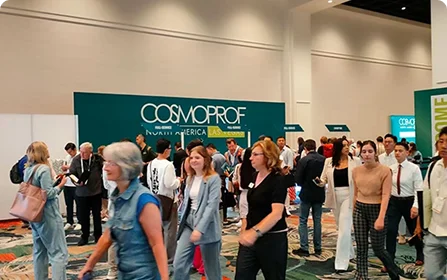
When discussing premium skincare packaging, many teams' first reaction is "to make it look high-end." However, those truly involved in the development know that it involves much more than just appearance. For skincare brands, packaging needs to stand out on store shelves, in live streams, and on e-commerce product pages, and also be instantly recognizable at trade shows. At beauty industry trade shows like COSMOPROF North America Las Vegas, eye-catching large display boards, clear brand lettering, and high-contrast visual systems align with the logic of skincare packaging: first, make it understandable, then make people want to pick it up.
This is why procurement, product, and design teams often get stuck on the same question: should they prioritize a visually sophisticated look or ensure functionality, cost, and mass production stability first? In reality, truly mature skincare packaging isn't about one particular aspect excelling; rather, it's about the simultaneous success of aesthetic design, material feel, filling compatibility, and supply chain feasibility. Missing any one of these elements can result in a product that looks good on the sample but is unattractive in mass production.
First, understand clearly: what problems does high-end skincare packaging actually solve for the brand?
Premium skincare packaging is more than just a "pretty box"; it typically serves several functions simultaneously. First, it conveys the price range and brand positioning. Consumers can judge a skincare brand's trustworthiness within seconds based on the material, color, printing quality, and how it's opened. Second, it helps the product be quickly identified in the sales environment. Whether it's a department store counter, pharmacy, e-commerce warehouse, or trade show display, the packaging must stand out amidst a sea of information. Third, it protects the formula. Skincare products are often sensitive to light, oxygen, temperature, and pollution; the packaging structure is not just a container but also part of the formula itself.
From a supply chain perspective, packaging also impacts logistics and rework rates. A seemingly "expensive" package, if difficult to assemble, poorly sealed, and easily damaged during transport, can ultimately turn its aesthetic appeal into after-sales problems. A common pitfall for skincare brands isn't a lack of funds for packaging, but rather the separation of "visual appeal," "functionality," and "compliance" into three separate departments, resulting in no one truly taking responsibility for the overall solution.
Several Packaging Ideas Suitable for High-End Skincare
Different product lines have vastly different packaging requirements. No single structure is suitable for all skincare products; it's best to determine the packaging based on dosage form and usage method, rather than on whether it "looks high-end."
1. Glass bottles and thick-walled containers
Glass is frequently used in serums, creams, and high-priced skincare products because it easily evokes associations of "stability, cleanliness, and professionalism." Its advantages include a pleasant texture, generally strong barrier properties, and relatively easy-to-create layered surface finishes. However, the weight, breakage risk, and shipping costs of glass all require careful evaluation. This is especially important for brands with a high e-commerce presence; they cannot rely solely on display aesthetics.
2. Hoses, pump heads, and vacuum/airtight structures
If a product formula is more susceptible to contamination, or if a brand wants to emphasize "hygiene, precision, and convenience" as selling points, pump heads and vacuum solutions are often more suitable. They are not inherently "lower-end" than glass; the key lies in surface treatment, proportion control, and consistency in details. For many high-end creams and serums, what truly enhances the experience is not the precious metallic color, but rather the pressure applied, dispensing stability, and sealing reliability.
3. Secondary packaging: cardboard boxes, hinged lid boxes, and gift boxes.
Paper-based secondary packaging remains one of the most common brand carriers for high-end skincare products. It gives design teams more freedom: hot stamping, embossing, spot UV coating, tactile film, partial windows, and even the tactile differences brought by different weights of cardboard can directly influence consumers' judgment of "refinement." However, there's a practical reminder: the more decoration, the more difficult it is to manage process tolerances and yield rates. The more complete the design draft looks, the more careful the supplier must be with alignment, color difference, and surface abrasion resistance during sampling.
4. Combination sets and display packaging
Holiday gift boxes, limited-edition sets, and brand event bundles often rely more on display design than on individual containers. For these types of projects, packaging is essentially a "sales tool." It needs to protect the individual item while creating a sense of depth upon opening. If the brand also plans to showcase the product at trade shows or pop-up stores, the secondary packaging and on-site visual system should ideally be consistent to avoid consumers seeing one set of visual language at the booth and receiving a different one.
Materials and Surface Finishing: Where Does the Premium Feel Come From, and Where Are the Risks?
The most easily underestimated aspect of skincare packaging is the relationship between materials and surface finishes. Many teams initially focus only on "matte" or "metallic" finishes, but what truly impacts the final result is often whether the base material and printing method are compatible.
Cardboard, laminate, metal foil, transparent window materials, glass, plastic, and aluminum each have their own expressive boundaries. For example, soft, low-reflective surfaces are generally easier to create a quiet, restrained, high-end feel; while high-gloss or metallic effects are more direct, but also more likely to expose color differences and seams. Spot hot stamping, embossing, and spot color printing can enhance the sophistication, but once the structure becomes complex, the supply chain must simultaneously confirm sampling, batch consistency, and post-assembly methods. For the engineering team, decoration is not the final step, but rather something to be considered in conjunction with the structural design.
Another common misconception is equating "sustainable" directly with "more advanced." The reality is not that simple. While PCR materials, paper-based solutions, and recyclable structures are indeed becoming increasingly important, brands must first understand local recycling systems, product protection requirements, and the boundaries of brand communication. Otherwise, while the environmentally friendly terminology on packaging may look appealing, the actual user experience may suffer, potentially even affecting product stability. Sustainability is not just a slogan; it's more like a set of constraints.
When a brand launches new products, ask these questions first.
If you are a purchasing agent, product manager, or packaging engineer, when selecting high-end skincare packaging, it is recommended to ask more specific questions rather than directly asking "which one is the most expensive and looks the best".
First, how sensitive is this formula to light, oxygen, and moisture? If the contents themselves are unstable, even the most sophisticated packaging will only hide the problems. Second, what are the target channels? Department stores, multi-brand stores, e-commerce, medical aesthetic channels, and gift channels all have completely different packaging priorities. Third, what does the brand want consumers to remember through the packaging? Is it natural, professional, luxurious, technological, or a gift-giving attribute? Fourth, does it need to maintain consistency with the exhibition display, props, and promotional materials? In a setting like COSMOPROF North America Las Vegas, if the packaging language is disconnected from the on-site visuals, the brand will appear disjointed.
Common mistake: Looks high-end, but actually doesn't sell well.
The first mistake is over-design. Too many layers, too many colors, and too many special processes will make the product look "overly ambitious" but lack genuine brand memorability. The second mistake is deciding on the appearance first and then finding the factory to solve functional issues. This usually results in more revisions, longer sample cycles, and even having to cut the design during mass production. The third mistake is neglecting the unboxing and usage process. Skincare products are not disposable display items; consumers will repeatedly open, press, twist, and squeeze them. Any detail that is not convenient will weaken the brand's sense of luxury.
Another very real but often overlooked point is that the exhibition setting and the retail setting are not the same thing. Large lettering, green backdrops, and strong visual impact at trade shows are suitable for long-distance recognition; however, real skincare packaging needs to withstand close scrutiny. Fonts, edges, coatings, bottle openings, pump heads, and label placement are all areas where problems will be exposed upon close inspection. It's often said in the industry that "passing the sample test doesn't mean it will pass mass production," and this is especially true for skincare packaging.
Practical suggestions for procurement and product teams
If you're starting a new project, it's best to break down packaging development into three layers: content compatibility, structural manufacturability, and brand expression. First, confirm that the formula and container match, then confirm that stable mass production is possible, and finally optimize visual details. While this approach may not be as "romantic," it will save you a lot of trouble.
When communicating with suppliers, don't just rely on a single rendering. It's more valuable to have them explain the material sources, surface treatment methods, assembly processes, secondary packaging and transportation protection strategies, and which areas are most likely to experience problems during mass production. For high-end skincare projects, being able to expose risks early on is more important than simply making the sample look more attractive. Especially when brands plan to participate in trade shows, conduct channel roadshows, or launch overseas, it's best to unify the visual strategy between the on-site presentation and the final sales packaging as early as possible to avoid the two systems communicating in different ways.
FAQ: Frequently Asked Questions about Premium Skincare Packaging
Q1: Do high-end skincare packaging necessarily use expensive materials?
Not necessarily. Expensive materials are merely a means, not an end. Often, the quality of the cardboard, its surface treatment, structural proportions, and printing control are more effective in creating a sense of sophistication than simply piling on materials.
Q2: Won't eco-friendly packaging seem less luxurious?
That's not necessarily the case. The key lies in whether the design language is restrained, the structure is solid, and the brand communication is consistent. Environmental protection and high-end can coexist, but certain boundaries in materials and processes must be accepted.
Q3: When should packaging and exhibition visuals be done together?
If a brand is launching new products, participating in overseas exhibitions, or upgrading its channels, it's best to plan these activities simultaneously. If packaging, displays, and booth visuals are done separately, unifying them later is often more difficult.
What's the safest approach next?
If you're evaluating premium skincare packaging, it's recommended to start with a core product as a model, discussing the formula, container, secondary packaging, and presentation language on the same table. Don't wait until the visual design is finalized before addressing the manufacturing process, and don't wait until trial production to discover conflicts between shipping, display, and the unboxing experience. The true value of skincare packaging isn't just about "looking high-end," but about maintaining consistent quality across every stage—on the shelf, in storage, shipping, unboxing, and brand communication.
Once you understand this logic, packaging is no longer just the final layer, but becomes the brand's earliest and most consistent expression. For skincare products, this is often more important than a single marketing campaign.