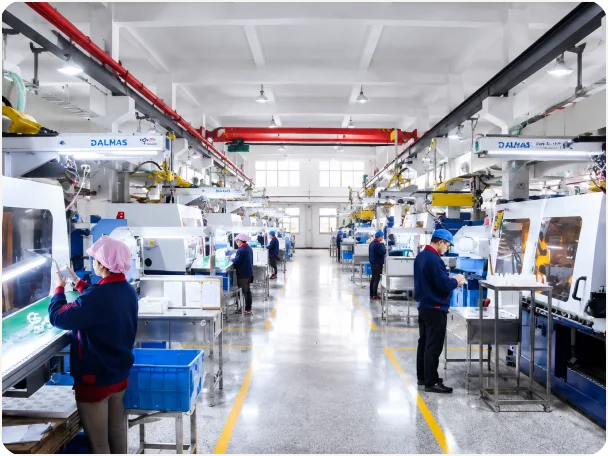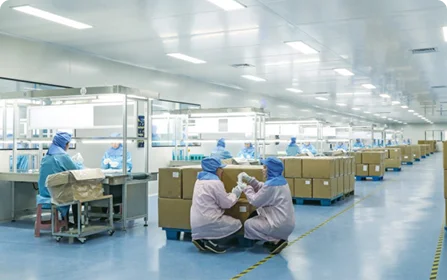

High-end quality isn't about piling on materials, but about replicable control.
When many brand managers discuss "How can premium skincare packaging be both high-end and mass-produced?", what they really want to ask isn't whether the design can be beautiful, but whether brand image, assembly stability, and supply chain rhythm can still be maintained when scaled up to tens of thousands of units. Skincare packaging has two biggest fears: one is looking expensive but being difficult to produce; the other is that while production volume increases, the quality suddenly drops. The former kills the project, the latter damages the brand.
High-end packaging and mass production are not inherently contradictory. The conflict usually stems from decision-making processes: designers only look at renderings, procurement only considers unit price, and factories only consider whether they can produce it. A truly mature approach is to treat packaging as a system, not just a bottle. Bottles, pumps, outer boxes, labels, secondary display components, and even subsequent visual materials used in trade shows and retail events must all be designed around the same identification logic. Just as large backdrops, vertical signage, and hanging signs commonly seen at trade shows need to function simultaneously, skincare brands also need to be recognizable from afar and detailed up close.
First, determine: what constitutes "high-end"?
Many people believe that a sense of luxury comes from complex designs, but that's not entirely true. For skincare products, it's more often a combination of the following qualities: clean proportions, restrained surface treatment, stable color scheme, smooth opening and closing mechanism, and clean printing edges. In other words, a sense of luxury often comes from "making fewer mistakes" rather than "doing a lot."
If you open the packaging, the three things that usually have the biggest impact on the first impression are: first, whether the outline is simple and easy to recognize at a glance on the shelf; second, whether the surface is consistent, with matte, low-gloss, and glossy finishes used sparingly; and third, whether the operation is smooth, such as screwing on the lid, pressing, opening the box, and springing back. These details directly affect consumers' judgment of the brand.
What supports mass production: Structure precedes decoration
To create a high-end feel in mass-produced products, the most effective approach is not to focus on decoration first, but on structure. The more stable the structure, the easier it is to scale up subsequent processes. For skincare packaging, a common approach is to prioritize the commonality of the bottle body, cap, pump head, and inner stopper, reserving high recognizability for these specific parts, rather than making the entire product non-standard.
For example, glass bottles offer a greater sense of weight, but require higher standards for transportation, breakage prevention, and assembly; plastic bottles are easier to mass-produce and lightweight, but if the surface, wall thickness, and color are not well controlled, they can easily appear cheap. Air pumps, double-walled bottles, vacuum structures, and replaceable liners can all enhance the sense of professionalism, but each additional layer usually means increased complexity in mold making, assembly, and quality control. When initiating a project, brands should not ask "Can we do it?" but rather "Does this layer truly serve the experience?"
Decorative techniques should serve mass production, not the other way around.
Screen printing, hot stamping, spot UV coating, spraying, electroplating-like coating, and label overlay are all common high-end techniques, but each has its limitations. Complex patterns, fine lines, and strict alignment requirements can amplify deviations during mass production; multi-layer spraying and multiple baking processes also increase instability. A more prudent approach is to concentrate high-difficulty processes on a few key surfaces, such as the main label on the front, the top of the bottle cap, or the window on the outer box, while keeping other areas as simple as possible.
This is why many established brands prioritize a combination of "stable basic structure + enhanced local processes." It may not be the most dramatic, but it often makes it easier to maintain consistency during the mass production phase.
Material selection: More expensive is not necessarily better; more suitable is better.
Common skincare packaging materials can be broadly categorized into glass, plastic, metal, and cardboard systems. Glass is better suited for creating a professional and sophisticated feel for products like serums, creams, and ampoules; plastic is more suitable for products that are frequently used daily and emphasize lightweight and durability; cardboard boxes are responsible for conveying information, protecting the contents, and facilitating shelf identification. However, what truly determines success is often not a single material, but rather the harmony between the materials used.
From a sustainability and supply chain management perspective, the single-material approach is becoming increasingly important. The reason is practical: the more complex the structure, the more difficult recycling and supply chain coordination become. Even if brands cannot fully switch to a single material immediately, they should at least assess the ease of disassembly, the necessity of secondary packaging, and whether the printing area can be reduced early on. There is no absolute standard, but one common sense holds true: the fewer ineffective layers, the easier it is to spend money on what is truly visible.
Don't overlook "invisible brand consistency"
Many skincare brands invest heavily in packaging, but the visual experience often falters at trade shows, pop-up stores, or franchise events. You might see minimalist platinum packaging, yet the booth itself has a completely different vibe; the bottle emphasizes restraint, but the back panel is crammed with text. This inconsistency diminishes the sense of luxury because consumers don't just make judgments based on the bottle; they piece together all the touchpoints.
I prefer to view it as a systems engineering project. The high-brightness large images, long-distance recognizable lettering, vertical wayfinding, and backdrops commonly seen at trade shows are essentially all about establishing the ability to "look good from a distance." The same applies to packaging: on the shelf, consumers first look at the outline and main color; after receiving it, they look at the material and feel; and when actually using it, they judge whether the details are reliable. If any one of these three layers of experience is missing, the brand image will be weakened.
Key points that the procurement and product teams should keep a close eye on
First, determine the core structure, then decide on the surface treatment. Don't do it the other way around. Finalize the bottle shape, cap shape, pump head, and inner stopper—these are the parts that determine the difficulty of mass production—so that the subsequent visual design has a clear focus.
Second, minimize unnecessary customization. Non-standard parts may seem like they tell a story, but they often complicate mold making, assembly, and replenishment. This is especially true for first-time projects; it's best to leave room for iterations rather than cramming all changes into a single, extreme solution from the outset.
Third, during the prototyping stage, don't just look at how "similar" it is, but also how "stable" it is. Consistency in feel, printing adhesion, cap concentricity, and pump head feedback are all closer to the real market than a single rendering.
Fourth, consider the terminal display as well. The outer box, inner tray, display stand cards, pop-up visuals, and exhibition materials should ideally be based on the same set of visual rules. Even if you end up with only a large backdrop, it should echo the packaging language, rather than being disjointed.
Common misconception: It looks high-end, but it's actually difficult to mass-produce.
One of the most common misconceptions is that "complexity" equates to "high-end." For example, layered structures, excessive metal parts, and overly dense decorative patterns may seem meticulous in the short term, but they are prone to color differences, scratches, and assembly deviations after mass production.
Another misconception is treating packaging as a one-off design project, rather than as part of the product lifecycle. It's common to aim for a stunning initial launch, only to find the supply chain can't keep up during restocking. A truly reliable solution should allow for flexibility in initial production, subsequent restocking, channel distribution, and in-store display.
There's another small but crucial detail: brands rely too heavily on the "premium feel on screen." Renderings can be beautiful, but in reality, the weight, reflections, edge finishing, and opening/closing damping all speak for themselves. Many teams only catch up on this gap after the product arrives.
If you are working on a project, answer these three questions first.
Who is your packaging intended for: the homepage of e-commerce platforms, store shelves, medical aesthetic channels, or high-end gifts? Different scenarios have completely different requirements for visuals and structure.
What do you most want to preserve: a sense of weight, a sense of cleanliness, a sense of technology, or a sense of naturalness? First, set a main theme, and then let other elements converge around it.
Which part are you willing to invest in to create complexity: the bottle body, the cap, the surface finish, or the outer packaging system? Don't try to have it all, or you'll end up with nothing that's stable.
If you've figured out these three things, you've already solved half the problem: How can premium skincare packaging be both high-end and mass-produced? The other half isn't about inspiration, but about selection, prototyping, and supply chain management. The most practical next step isn't to draw up a more beautiful rendering, but to conduct a genuine review of the bottle, manufacturing process, and assembly sequence.