
What Should Buyers Know About Aerosol Can Manufacturers?
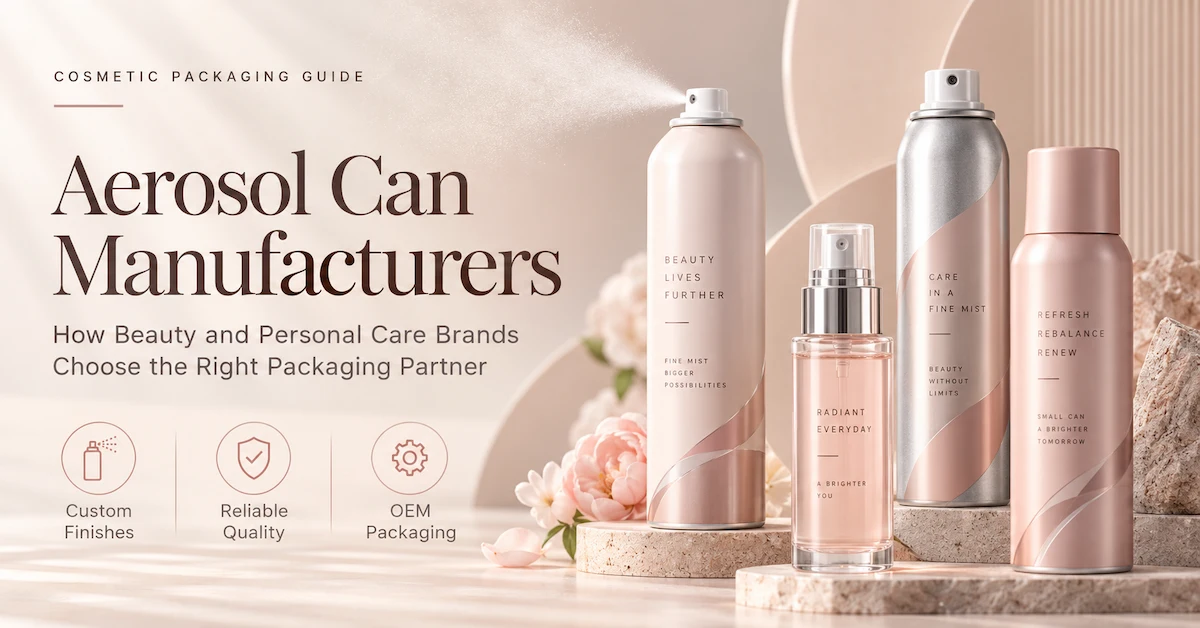
For beauty, personal care, and consumer product companies, choosing the right aerosol can manufacturers is an important packaging decision that affects product performance, user experience, brand image, and long-term supply stability.
An aerosol package is not simply an empty metal container. It is a complete dispensing system that may involve the container body, internal coating, valve, actuator, formulation compatibility, filling process, decoration, transportation requirements, and target market regulations.
This is why professional buyers should evaluate aerosol suppliers based on their ability to support the complete packaging process instead of comparing only unit price.
For brands exploring different cosmetic packaging formats, reviewing available Cosmetic Packaging Products can help determine whether aerosol packaging, bottles, jars, or other formats better match the product application.
Who Typically Works With Aerosol Can Manufacturers?
Different buyers approach aerosol packaging with different priorities. Understanding the buyer type helps define the right supplier evaluation criteria.
Beauty and Skincare Brands
Beauty brands often select aerosol packaging for products requiring convenient spraying, premium appearance, and strong shelf presentation.
Common applications include:
- Body mist
- Facial spray
- Skincare mist
- Hair care products
- Personal care sprays
These buyers usually focus on:
- Packaging appearance
- Brand customization
- Color consistency
- Product protection
- Stable repeat production
Personal Care Companies
Personal care manufacturers may use aerosol packaging for:
- Deodorants
- Body sprays
- Shaving products
- Hair styling products
Their concerns often include:
- Filling compatibility
- Spray performance
- Valve integration
- Production consistency
Private Label Brands
Private-label businesses usually need flexible packaging solutions that support:
- Multiple product lines
- Brand customization
- Market testing
- Controlled production costs
For these companies, selecting the right supplier can influence both launch speed and future product expansion.
Contract Manufacturers and Fillers
Contract manufacturers need packaging partners that understand the relationship between:
- Container design
- Filling equipment
- Components
- Product formulation
- Production requirements
A supplier that only provides the container may not be enough for complex aerosol projects.
How Does Aerosol Packaging Work as a Complete System?
Aerosol packaging works through cooperation between several components.
Container Body
The container provides structural protection and forms the primary package.
Important considerations include:
- Material selection
- Capacity
- Shape
- Wall structure
- Surface finish
Valve and Actuator System
The dispensing system determines:
- Spray pattern
- User experience
- Product release consistency
The container and dispensing components must be evaluated together.
Formula Compatibility
Different products have different chemical characteristics.
Aerosol packaging may require evaluation of:
- Alcohol-based formulas
- Oil-based formulas
- Water-based formulas
- Fragrance ingredients
- Active cosmetic ingredients
A package that works for one formula may not automatically work for another.
What Types of Aerosol Packaging Can Brands Choose?
Aerosol projects should start with application requirements instead of selecting a package based only on appearance.
| Product Application | Common Packaging Requirements |
|---|---|
| Body Spray | Premium appearance, reliable spraying, portable design |
| Deodorant | Daily-use durability, consistent dispensing |
| Hair Spray | Spray control, formula compatibility |
| Facial Mist | Fine spray experience, brand presentation |
| Personal Care Spray | Easy handling, stable performance |
CosmeBottle provides different aluminum packaging categories, including Aluminum Aerosol Cans and other aluminum packaging solutions for brands evaluating metallic packaging options.
How Should Buyers Evaluate Aerosol Can Manufacturers?
Selecting aerosol can manufacturers requires a structured evaluation process.
1. Manufacturing Experience
A supplier should understand:
- Aerosol container production
- Packaging requirements
- Customer customization needs
- Production consistency
Experience with similar applications can reduce development risks.
2. Customization Capability
Many brands require packaging that reflects their identity.
Customization may include:
- Color coating
- Printing
- Logo application
- Surface finishing
- Capacity selection
- Packaging design adjustments
Before starting customization, buyers should confirm:
- Available options
- Sample process
- Minimum order requirements
- Production timeline
3. Quality Control System
Packaging quality affects the final product experience.
Buyers should evaluate:
- Incoming material inspection
- Production monitoring
- Appearance inspection
- Dimensional control
- Batch consistency
- Traceability
What Technical Information Should Buyers Prepare Before Contacting Suppliers?
A complete project brief helps aerosol can manufacturers provide more accurate recommendations.
| Information | Why It Matters |
|---|---|
| Product type | Determines packaging direction |
| Formula characteristics | Supports compatibility evaluation |
| Capacity requirement | Defines available package options |
| Dimensions | Ensures filling and packaging compatibility |
| Spray requirement | Determines dispensing system |
| Decoration needs | Defines branding options |
| Target market | Supports compliance review |
| Order quantity | Influences commercial planning |
| Timeline | Helps establish realistic delivery |
Providing this information early reduces repeated communication and unnecessary revisions.
Why Is Internal Coating Important for Aerosol Packaging?
Internal coating can be an important consideration because the product directly interacts with the package interior.
Different formulas may create different requirements.
For example:
- Fragrance products may contain alcohol
- Skincare products may contain active ingredients
- Personal care products may contain oils or solvents
Buyers should discuss:
- Internal protection requirements
- Formula compatibility
- Storage conditions
- Intended product lifespan
The correct evaluation is not simply whether the container looks suitable, but whether the complete package system supports the product.
How Do Aerosol Can Manufacturers Support Custom Packaging Projects?
OEM and custom aerosol packaging projects usually involve several stages.
Step 1: Requirement Analysis
The supplier reviews:
- Product application
- Target market
- Packaging expectations
- Quantity forecast
Step 2: Packaging Selection
The buyer and supplier confirm:
- Container type
- Capacity
- Components
- Decoration direction
Step 3: Sample Development
Samples allow buyers to evaluate:
- Appearance
- Size
- Branding
- User experience
Step 4: Production Approval
Before mass production, both parties should confirm:
- Final specifications
- Approved samples
- Artwork
- Quality requirements
Step 5: Mass Production
Production should follow the approved version to maintain consistency.
Brands interested in customized packaging development can review CosmeBottle's About Us information and contact the team for project discussion through Contact Us.
How Much Do Aerosol Packaging Projects Cost?
The cost of aerosol packaging depends on multiple factors.
Main cost drivers include:
| Cost Factor | Impact |
|---|---|
| Container material | Influences base cost |
| Capacity | Affects material usage |
| Custom design | May increase development requirements |
| Decoration | Printing and finishing affect pricing |
| Quantity | Influences production efficiency |
| Components | Valve and actuator selection affects cost |
| Packaging method | Influences logistics cost |
A lower initial quotation does not always represent a lower total project cost.
Buyers should consider:
- Development cost
- Quality risks
- Production stability
- Repeat order consistency
- Supply reliability
How Can Brands Reduce Aerosol Packaging Supply Risks?
Packaging projects can experience risks when specifications are unclear.
Common risks include:
Unclear Product Requirements
Incomplete information may lead to unsuitable recommendations.
Different Sample Versions
Without revision control, teams may approve different versions.
Decoration Inconsistency
Color, printing, and surface finish need clear standards.
Supplier Communication Issues
A reliable supplier should provide clear communication throughout development.
A controlled specification and approved sample process help reduce these risks.
Standard Aerosol Packaging vs Custom Aerosol Packaging
Not every brand needs a fully customized aerosol container.
Standard Packaging
Suitable when:
- Existing formats meet requirements
- Faster launch is needed
- Decoration provides enough differentiation
Custom Packaging
Suitable when:
- Brand differentiation is critical
- Unique dimensions are required
- A specific market position is needed
Before developing a new structure, buyers can compare existing Aluminum Bottles and packaging options.
What Should Buyers Ask Aerosol Can Manufacturers Before Ordering?
Before choosing a supplier, buyers should ask:
- What aerosol packaging formats are available?
- What customization options are supported?
- How are samples approved?
- What quality inspections are performed?
- How are production changes controlled?
- What information is needed for quotation?
- How is repeat-order consistency maintained?
These questions help identify suppliers that can support long-term cooperation rather than one-time transactions.
Frequently Asked Questions About Aerosol Can Manufacturers
1. What products use aerosol cans?
Aerosol cans are commonly used for deodorants, body sprays, hair products, skincare sprays, fragrance products, and other personal care applications.
2. How do I choose reliable aerosol can manufacturers?
Evaluate manufacturing experience, customization capability, quality control, communication process, sample management, and repeat-order consistency.
3. Can aerosol cans be customized with my brand design?
Yes. Depending on the supplier's capabilities, customization may include colors, printing, finishes, and branding elements.
4. What information should I provide when requesting a quotation?
Provide product type, formula information, capacity, design requirements, quantity, target market, and delivery expectations.
5. Are all aerosol cans suitable for cosmetic products?
No. Compatibility depends on the formula, container system, internal requirements, and dispensing components.
6. What is the MOQ for custom aerosol cans?
MOQ depends on container selection, customization level, decoration requirements, and supplier production conditions.
7. How long does custom aerosol packaging production take?
The timeline depends on sampling, customization complexity, approval speed, order quantity, and production planning.
8. Should I test samples before bulk production?
Yes. Samples help confirm appearance, compatibility, dimensions, and overall package performance.
9. What quality issues should buyers pay attention to?
Common concerns include appearance defects, inconsistent decoration, component problems, and differences between approved samples and mass production.
10. Can aerosol packaging suppliers support OEM projects?
Many suppliers support OEM projects involving customized appearance, packaging specifications, and production according to approved requirements.
Conclusion
Choosing the right aerosol can manufacturers requires a complete evaluation of packaging technology, customization capability, quality control, application compatibility, and long-term supply reliability.
For beauty, personal care, fragrance, and private-label brands, the best supplier is not simply the one offering the lowest price, but the one that can provide a stable packaging solution from concept development to repeat production.
By clearly defining product requirements, evaluating packaging options, approving samples carefully, and maintaining controlled specifications, buyers can reduce sourcing risks and build a more reliable packaging supply chain. Brands exploring aerosol and aluminum packaging solutions can review CosmeBottle Products and submit project requirements through Contact Us for further evaluation.